

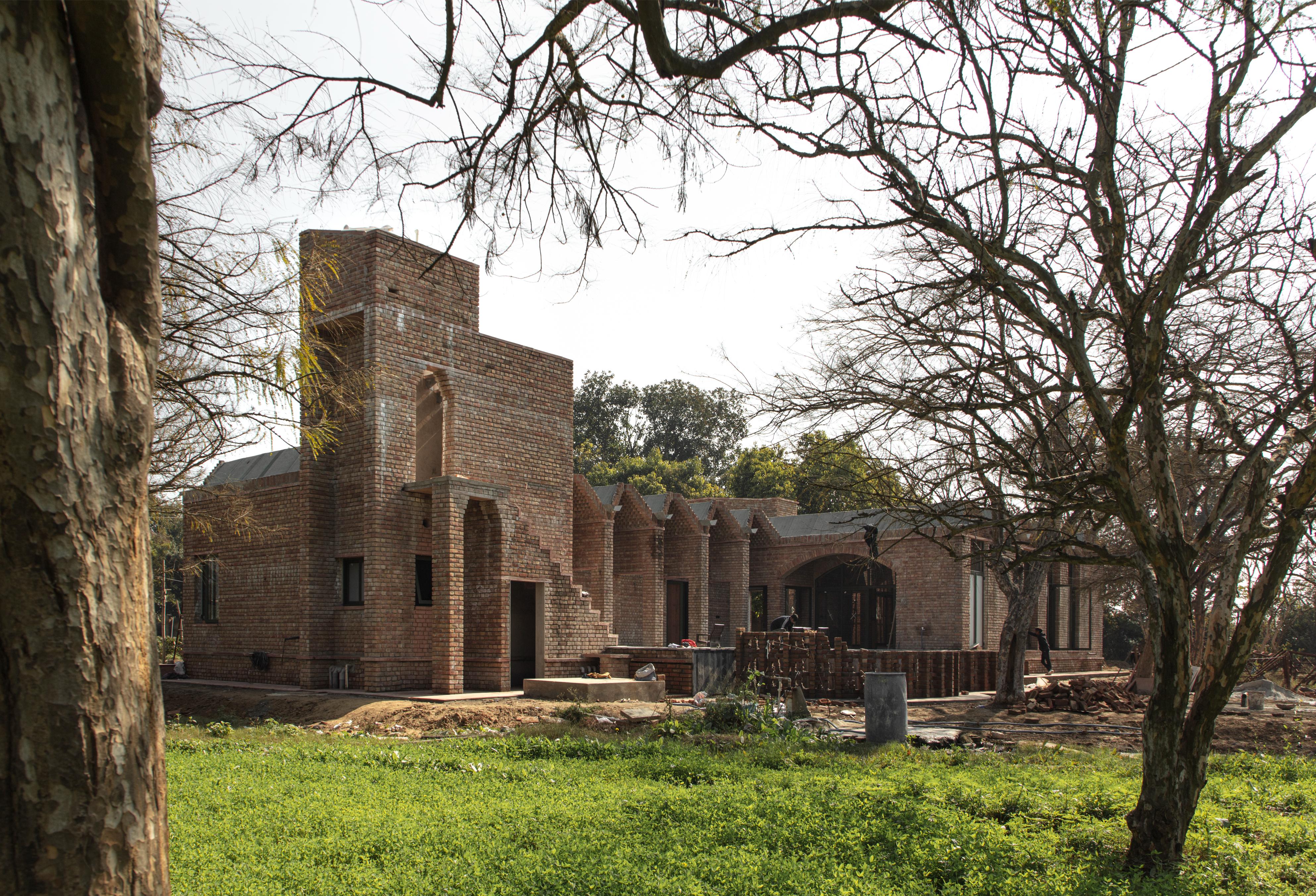
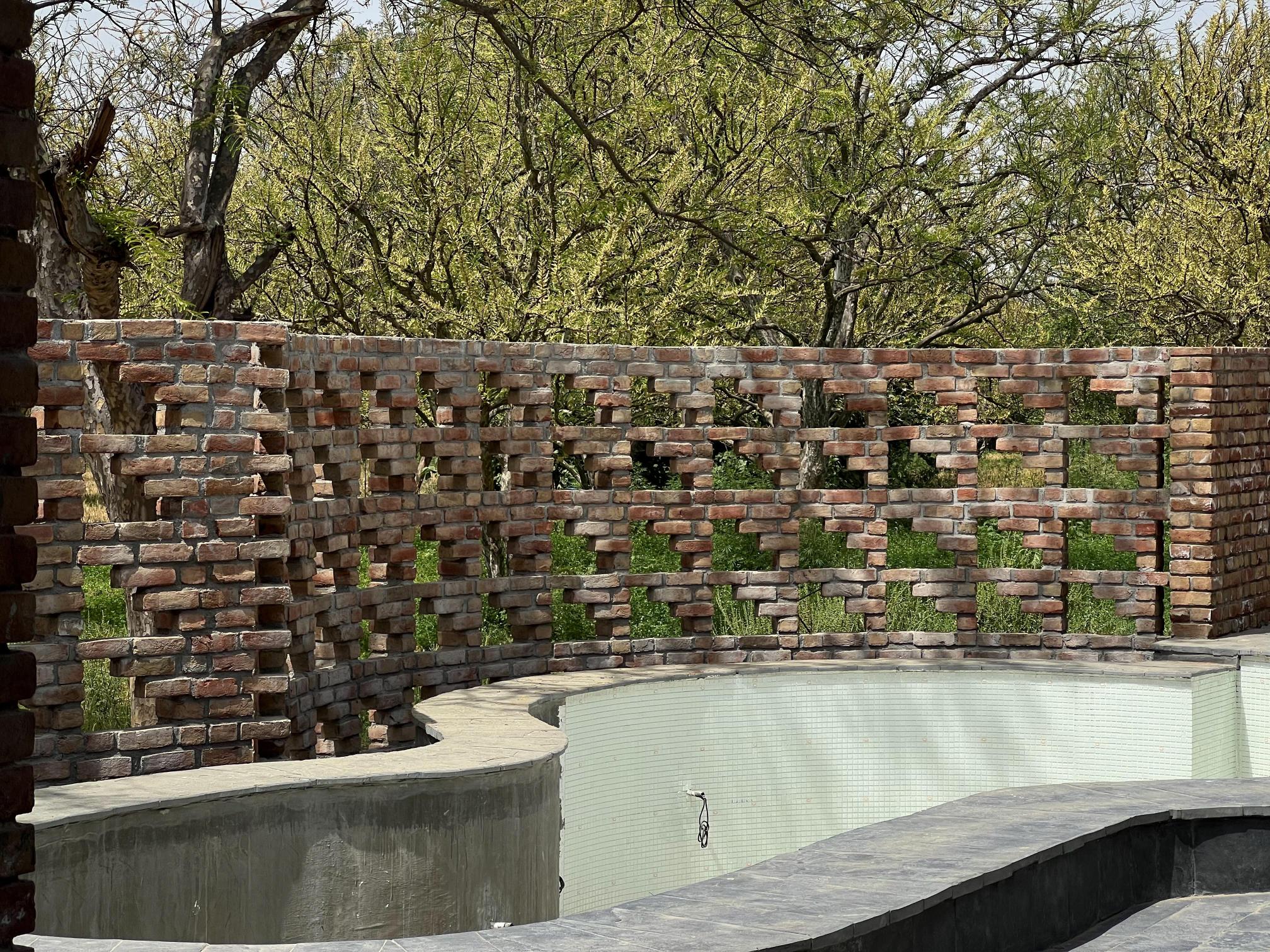
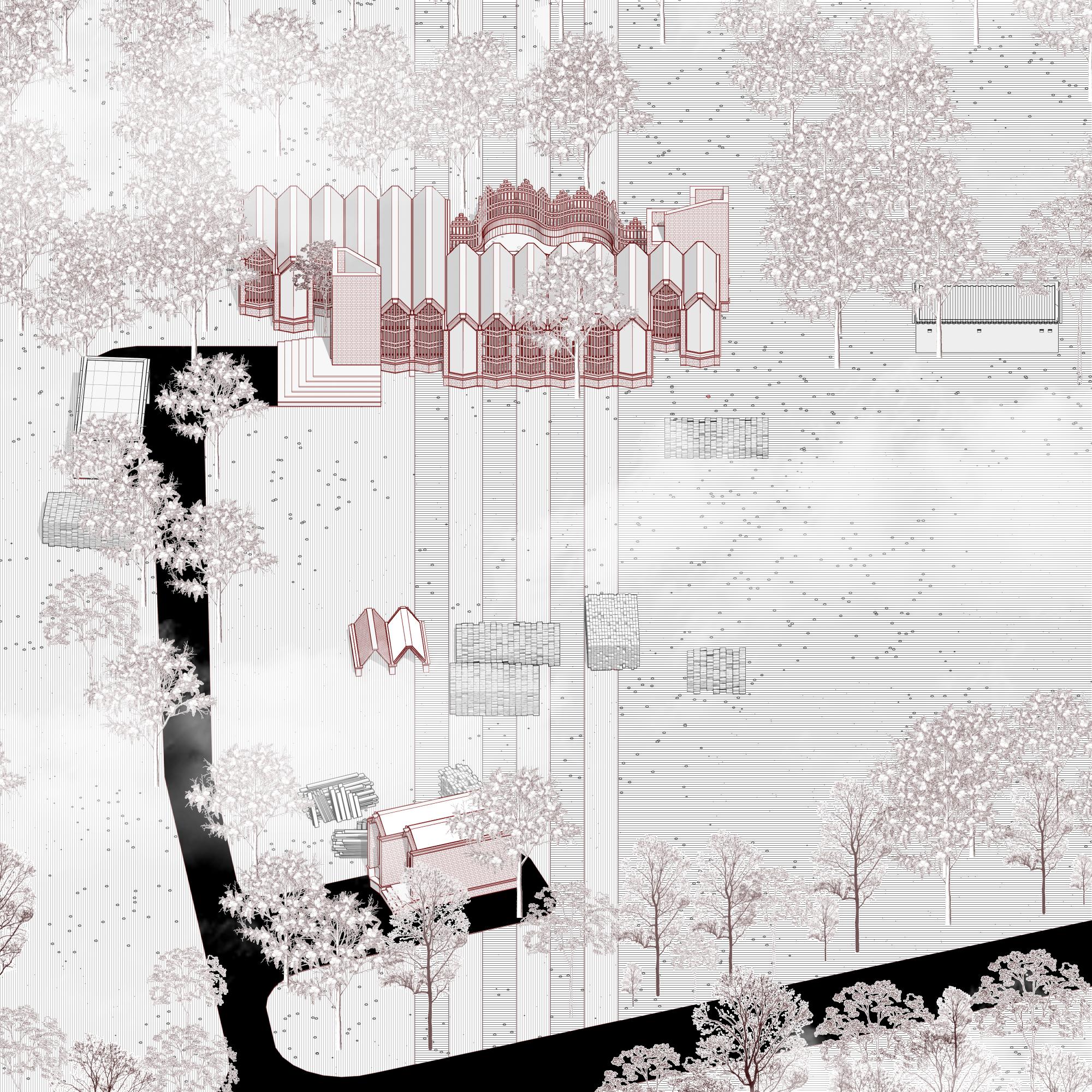
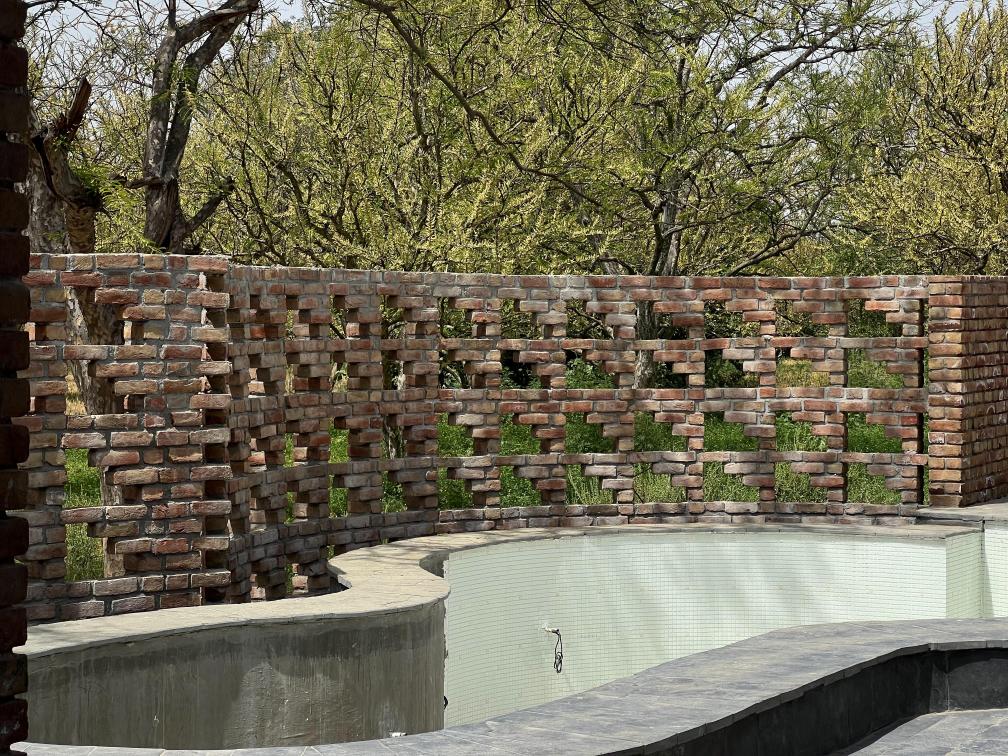
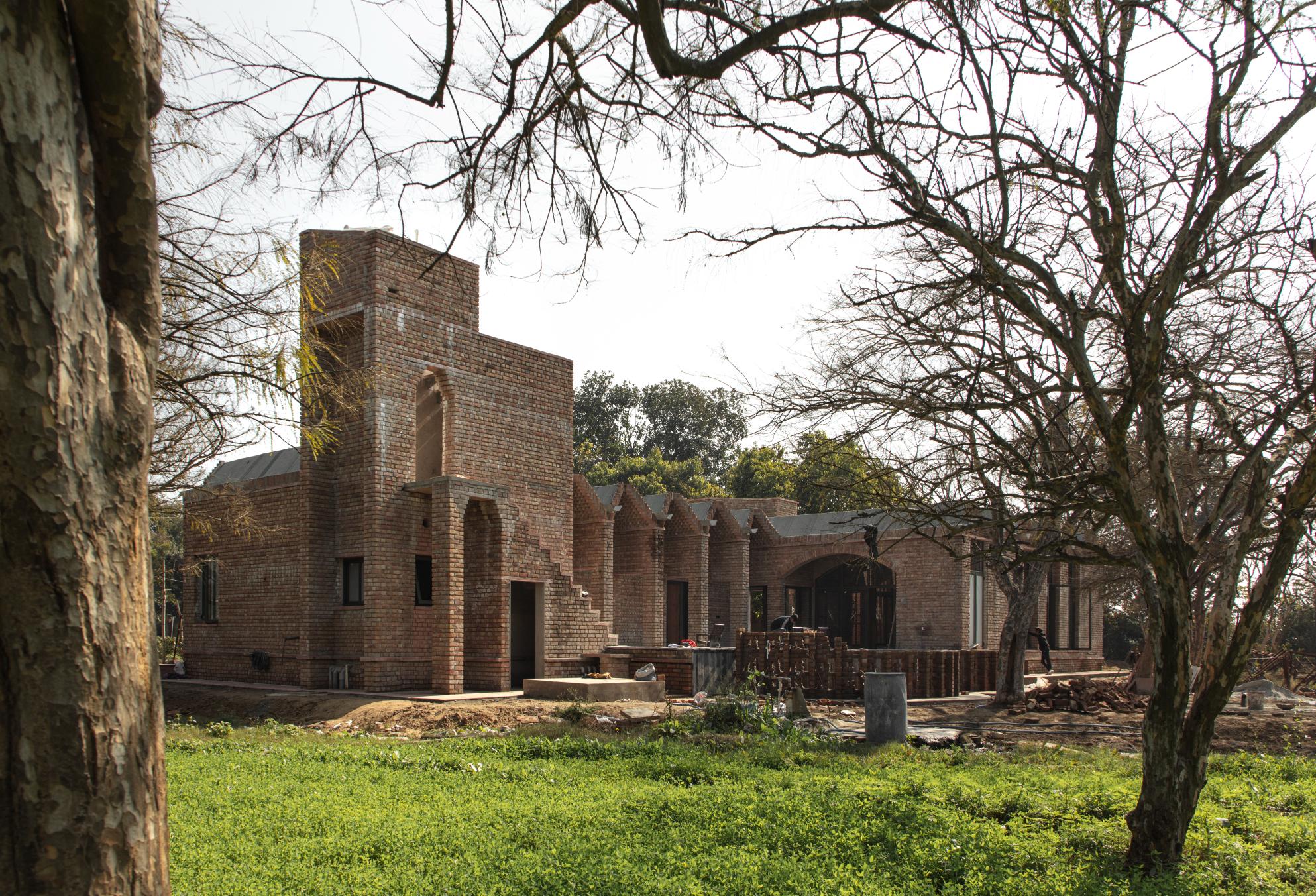
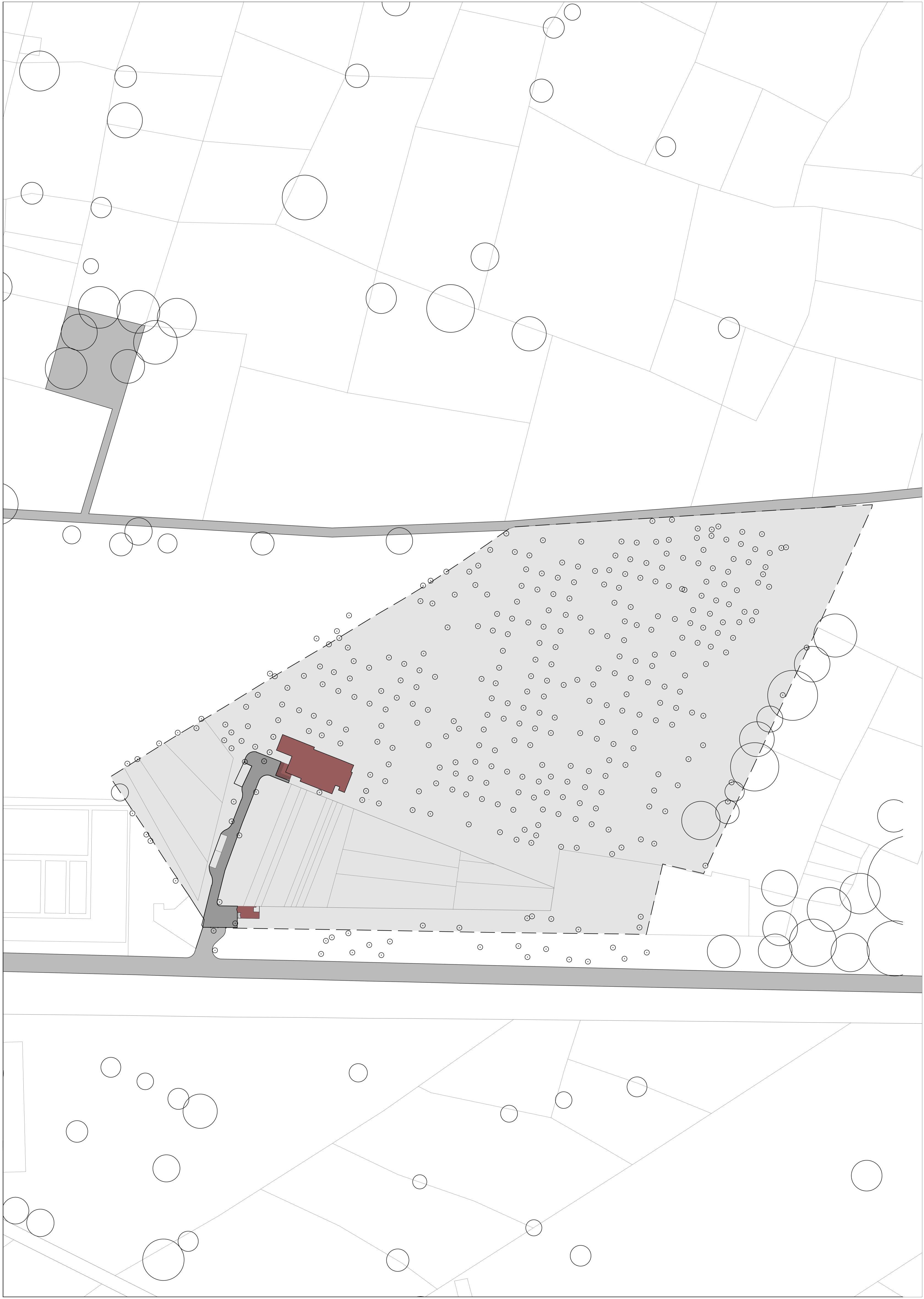
Our site in Mant, Uttar Pradesh is merely 15 kms away from the nearest brick kiln. This area is abelt for manufacturing of bricks as the soil quality and proximity to the river makes for afavorable location. Further, the building finds itself nestled in an 8-acre (32,375 sq. m.)gooseberry orchard. The Gooseberry Orchard House is a single-family weekend home built on afarm.
Our main stance on sustainability is to build for centuries, as opposed to 50 years for RCC frame structures considered by engineers today for residential buildings in India. One of the main culprits causing deterioration of buildings is steel embedded in cement concrete. With the passage of time, the steel re-bar corrodes as it reacts with the atmospheric moisture, to the detriment of the structure.
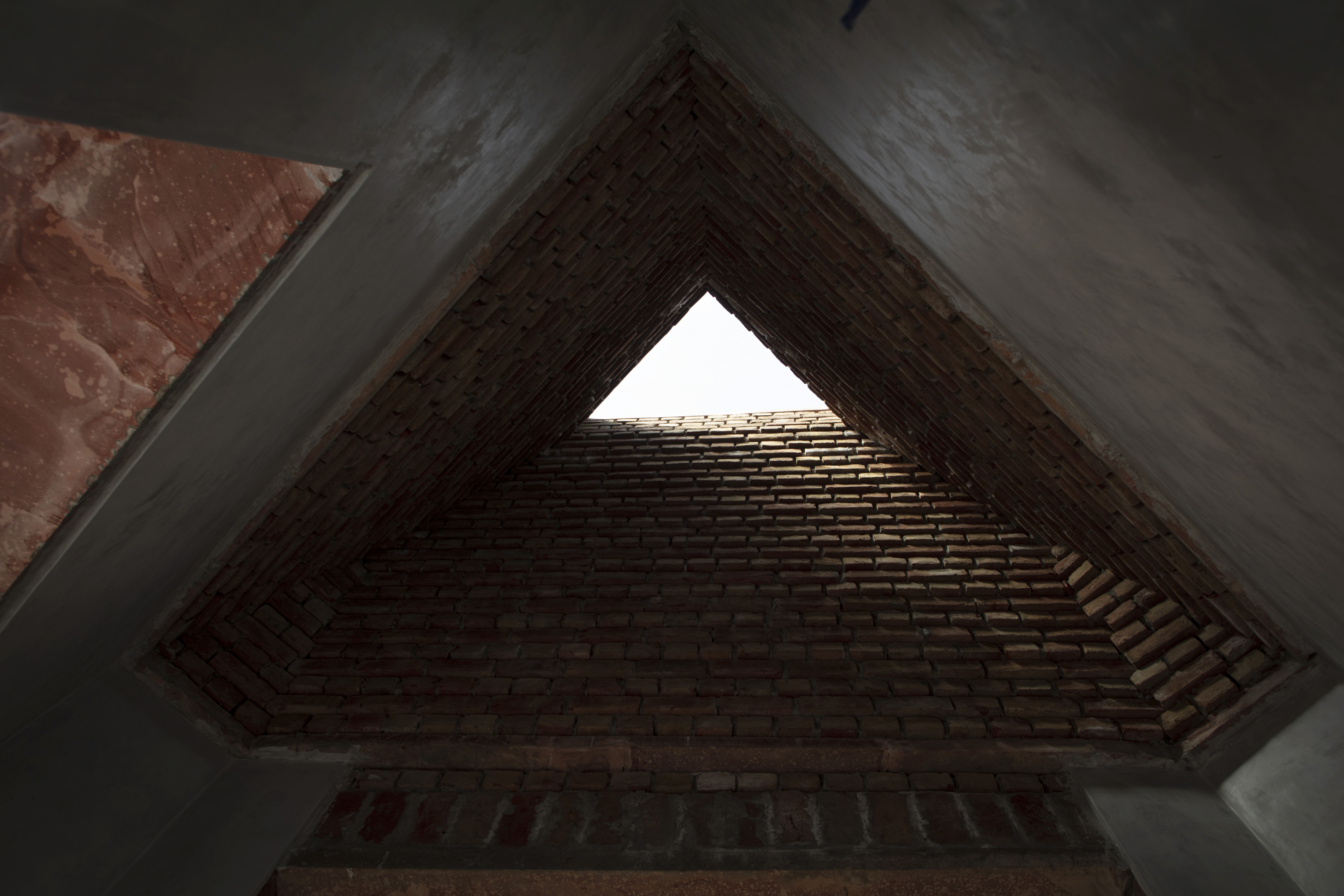
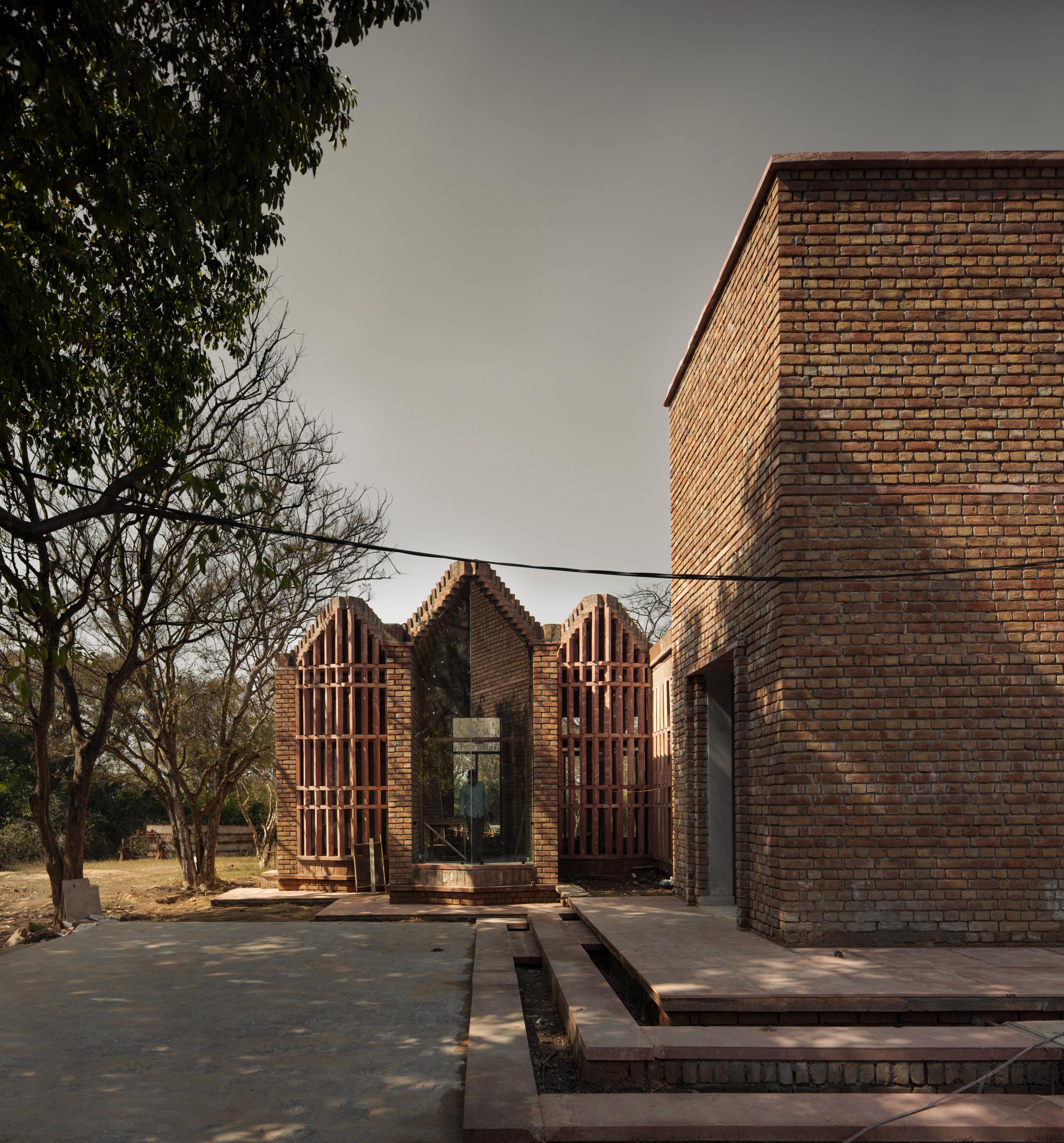
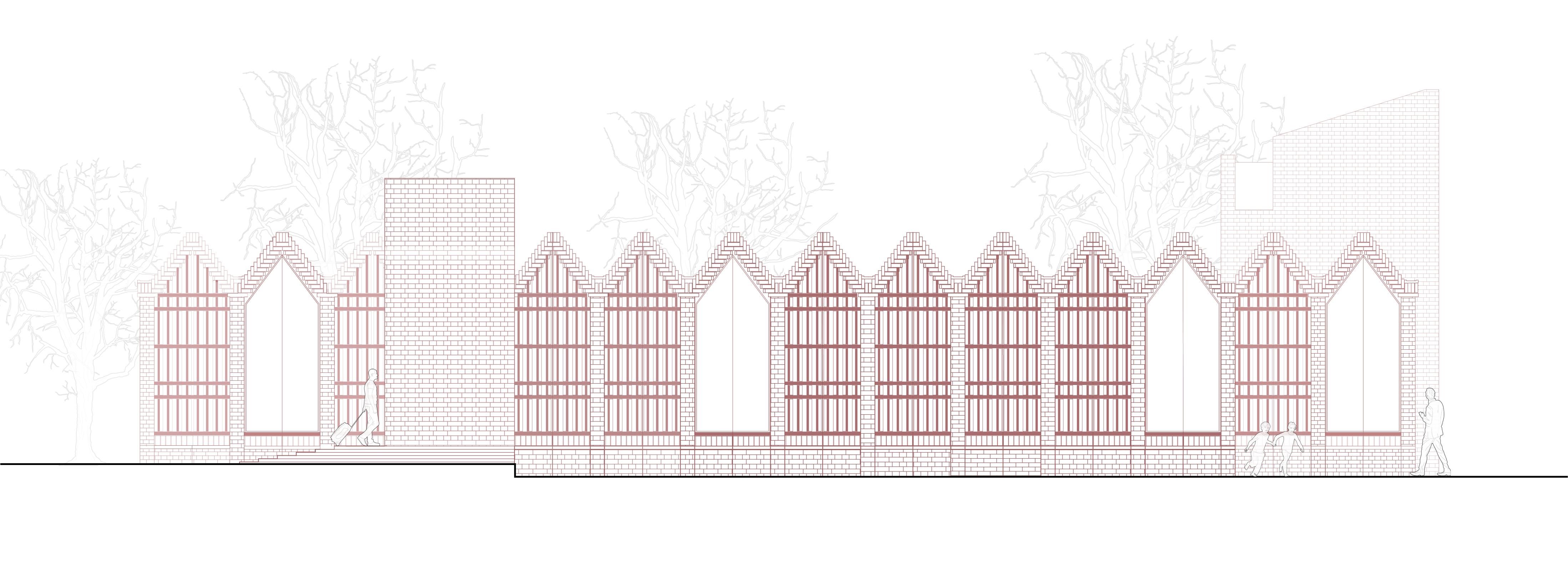
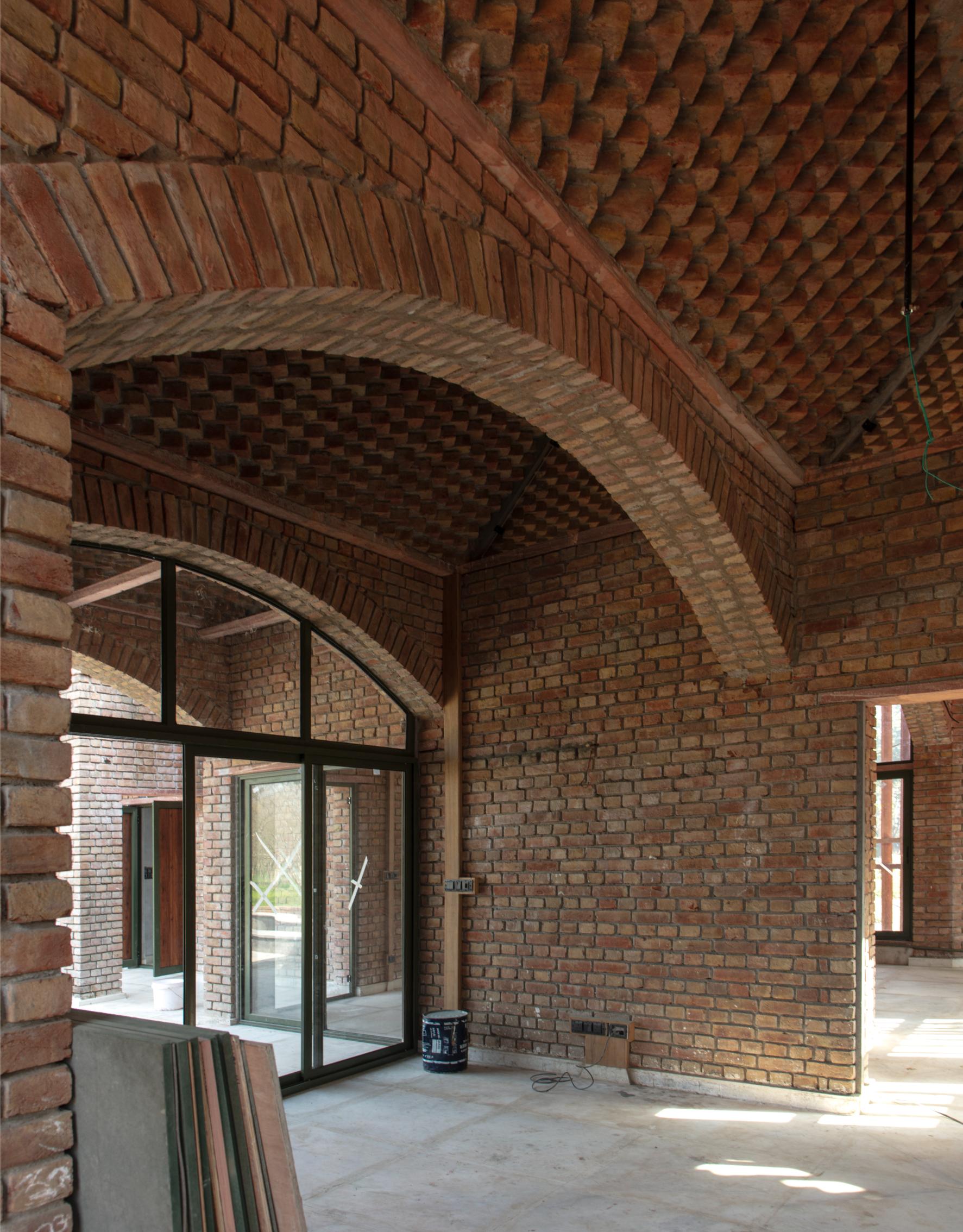
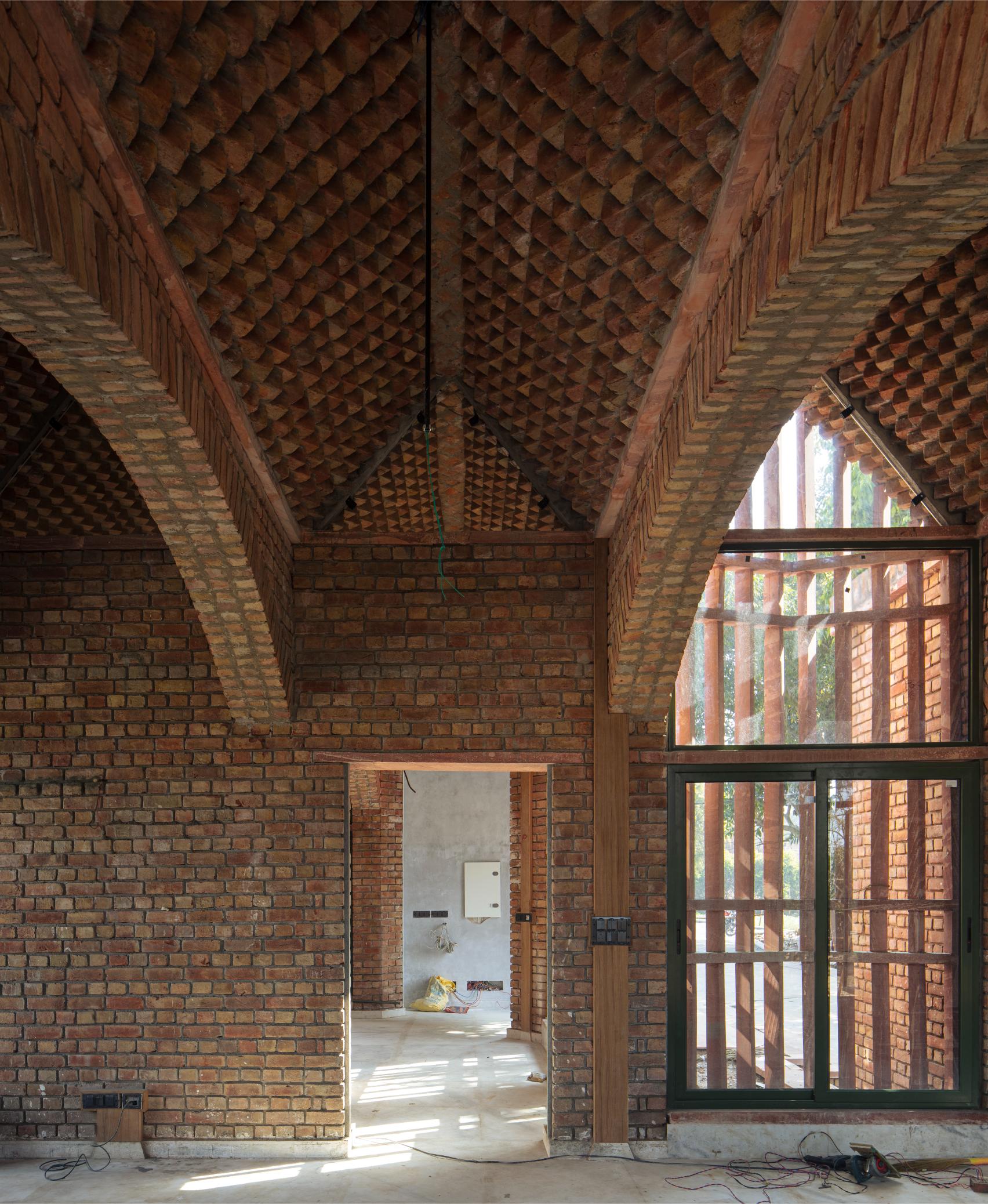
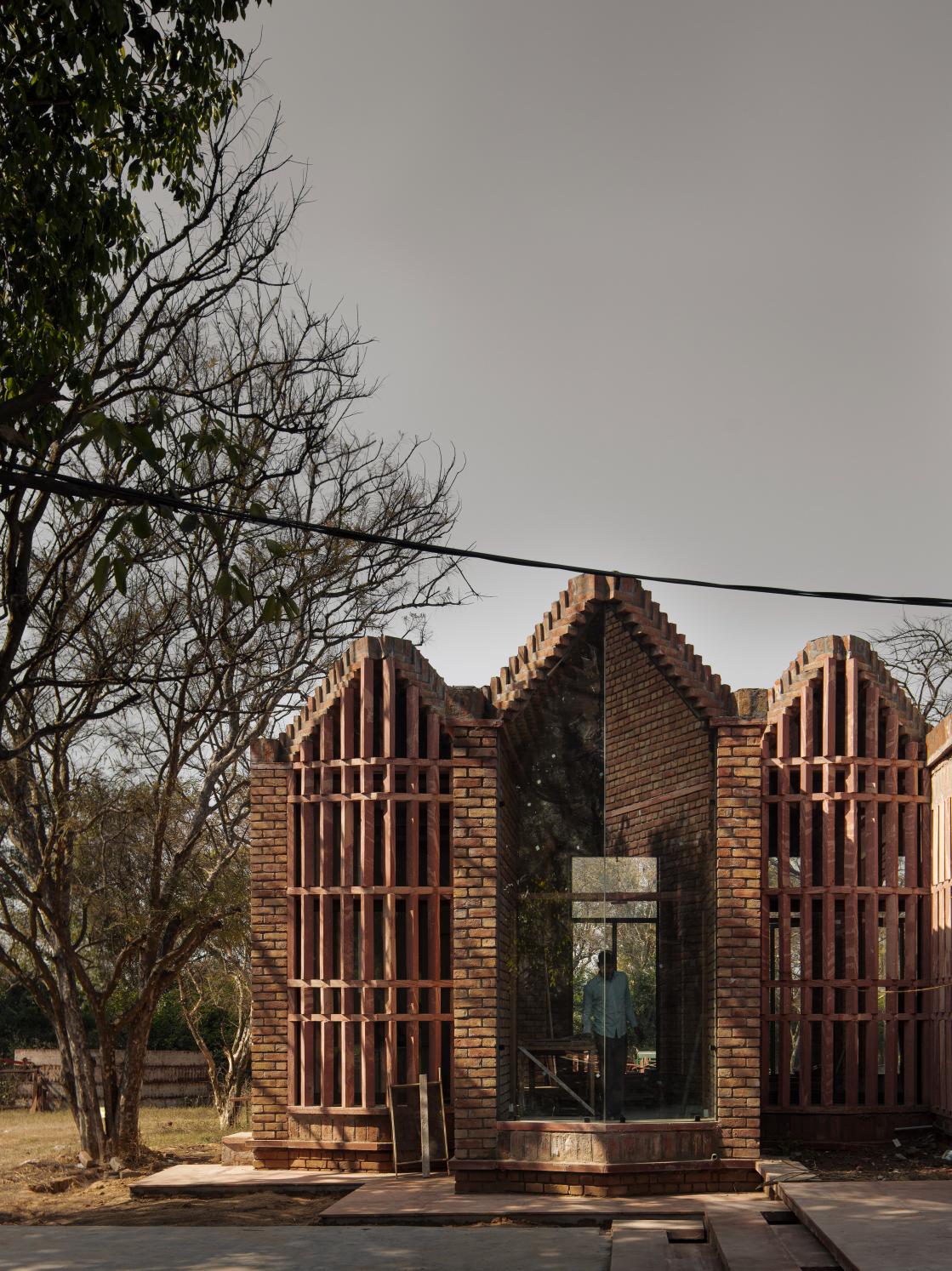
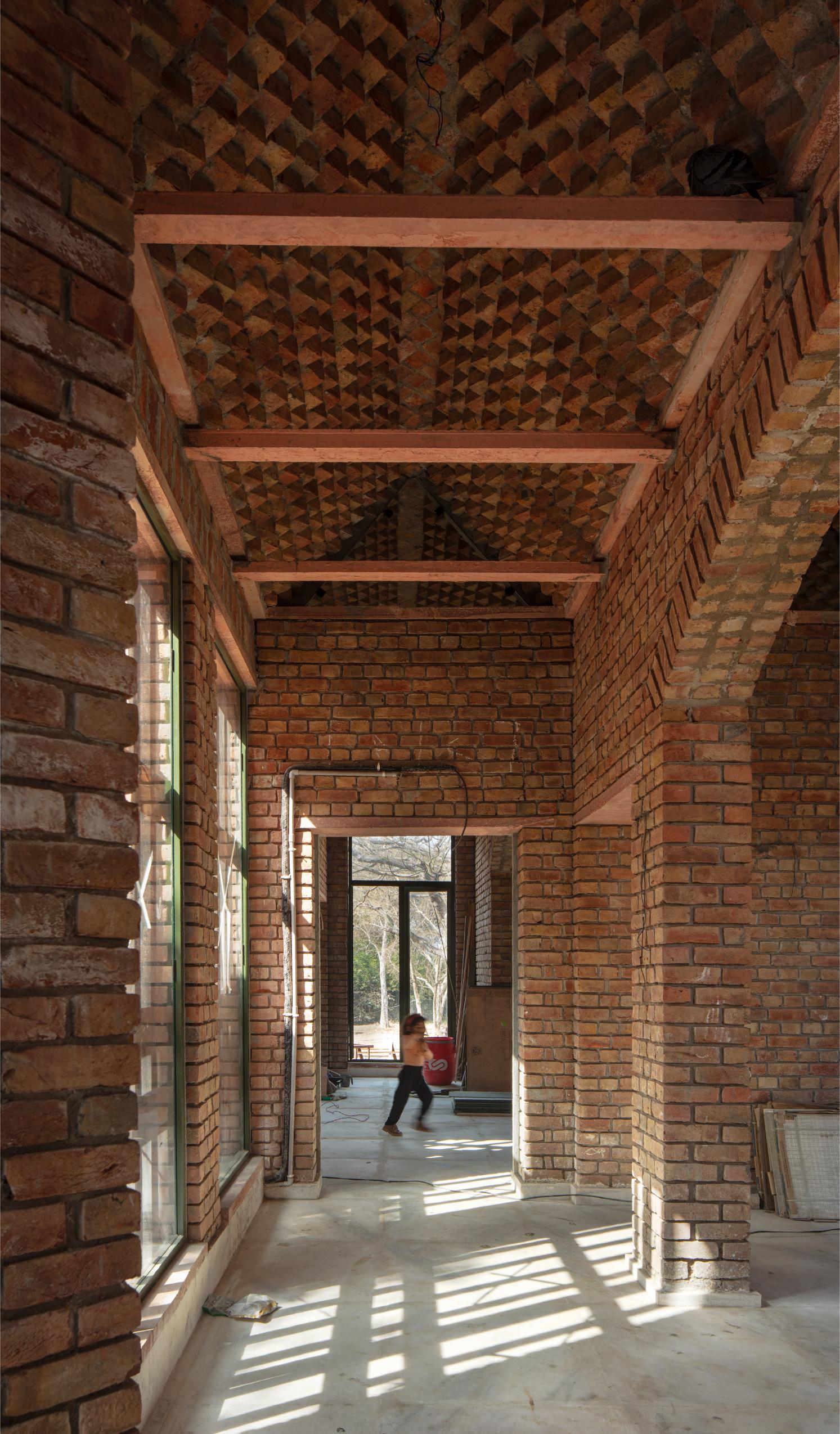
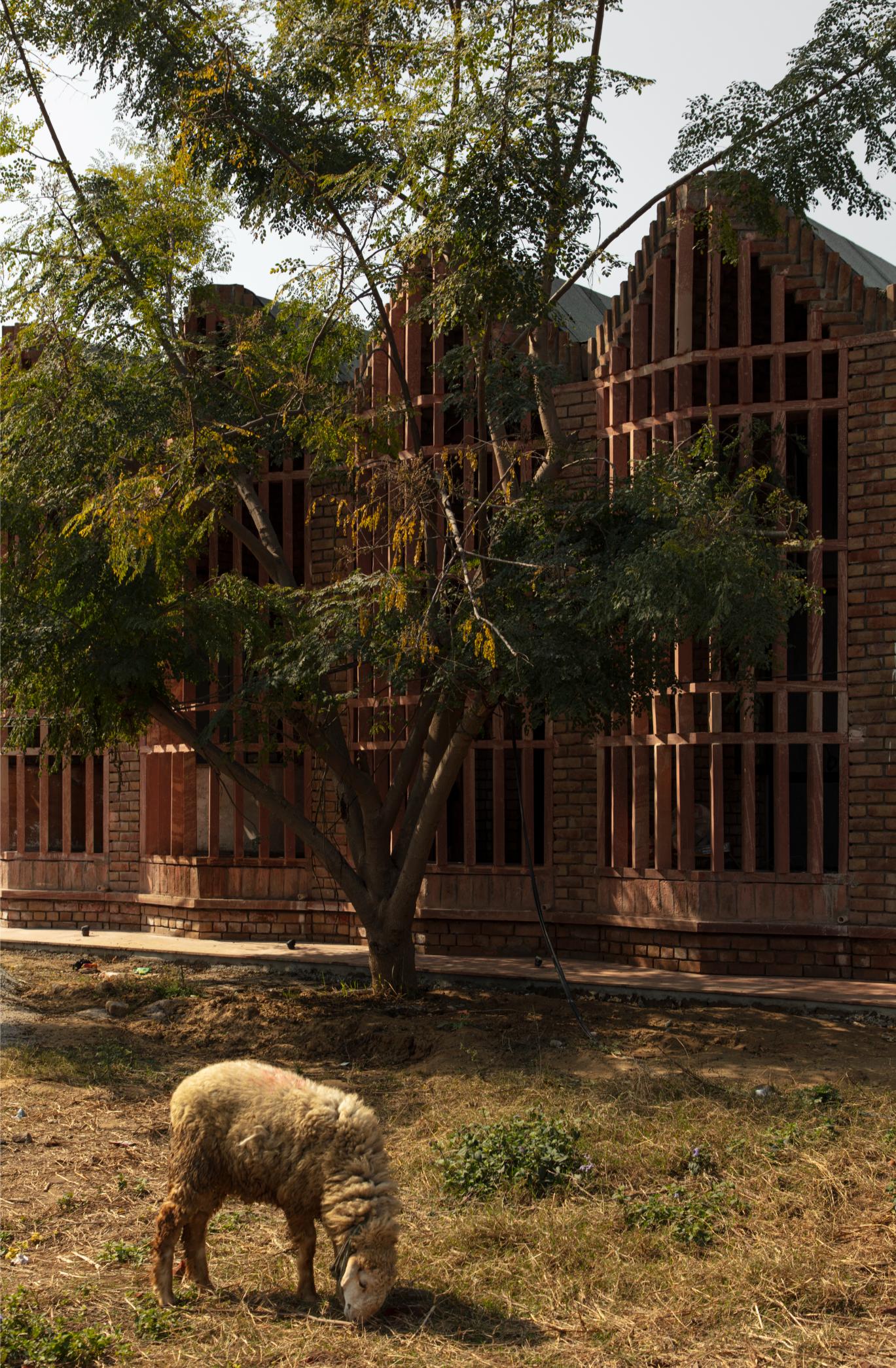
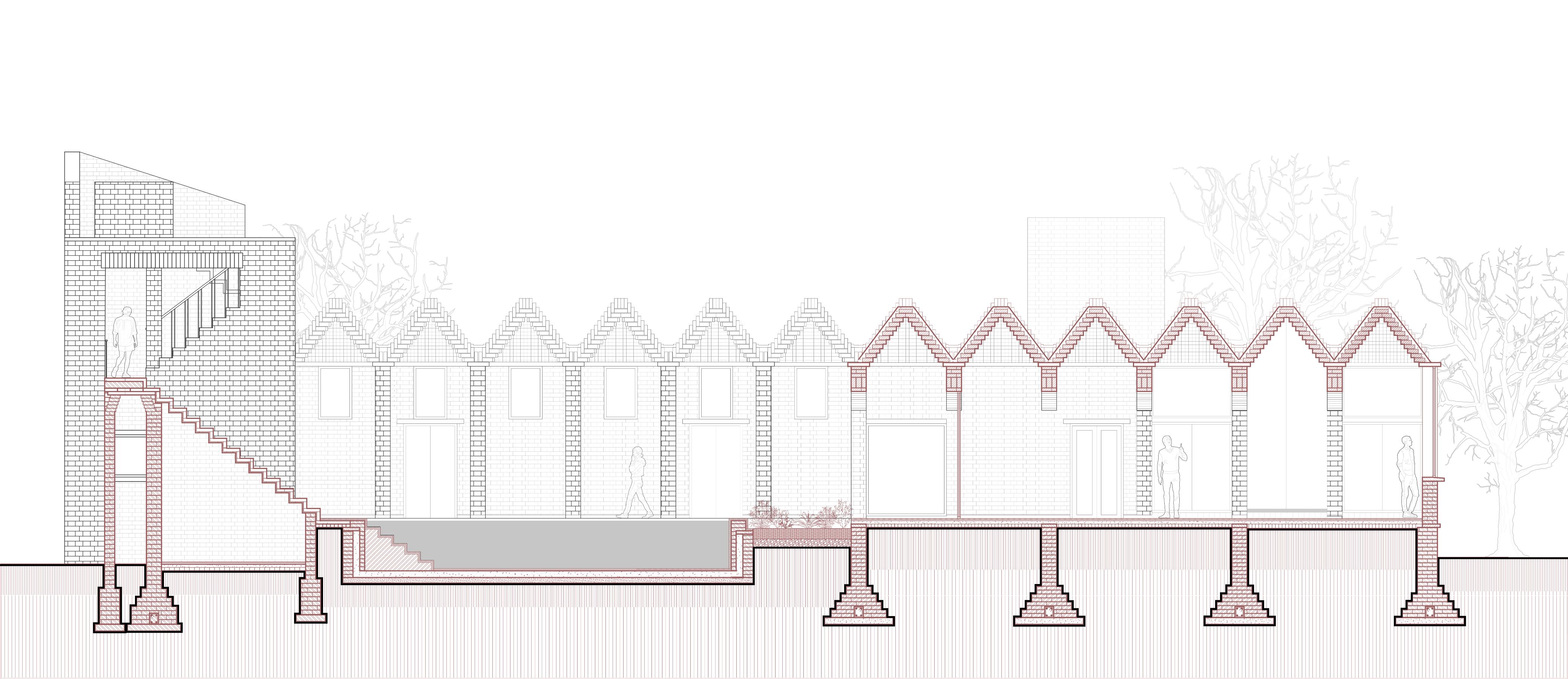
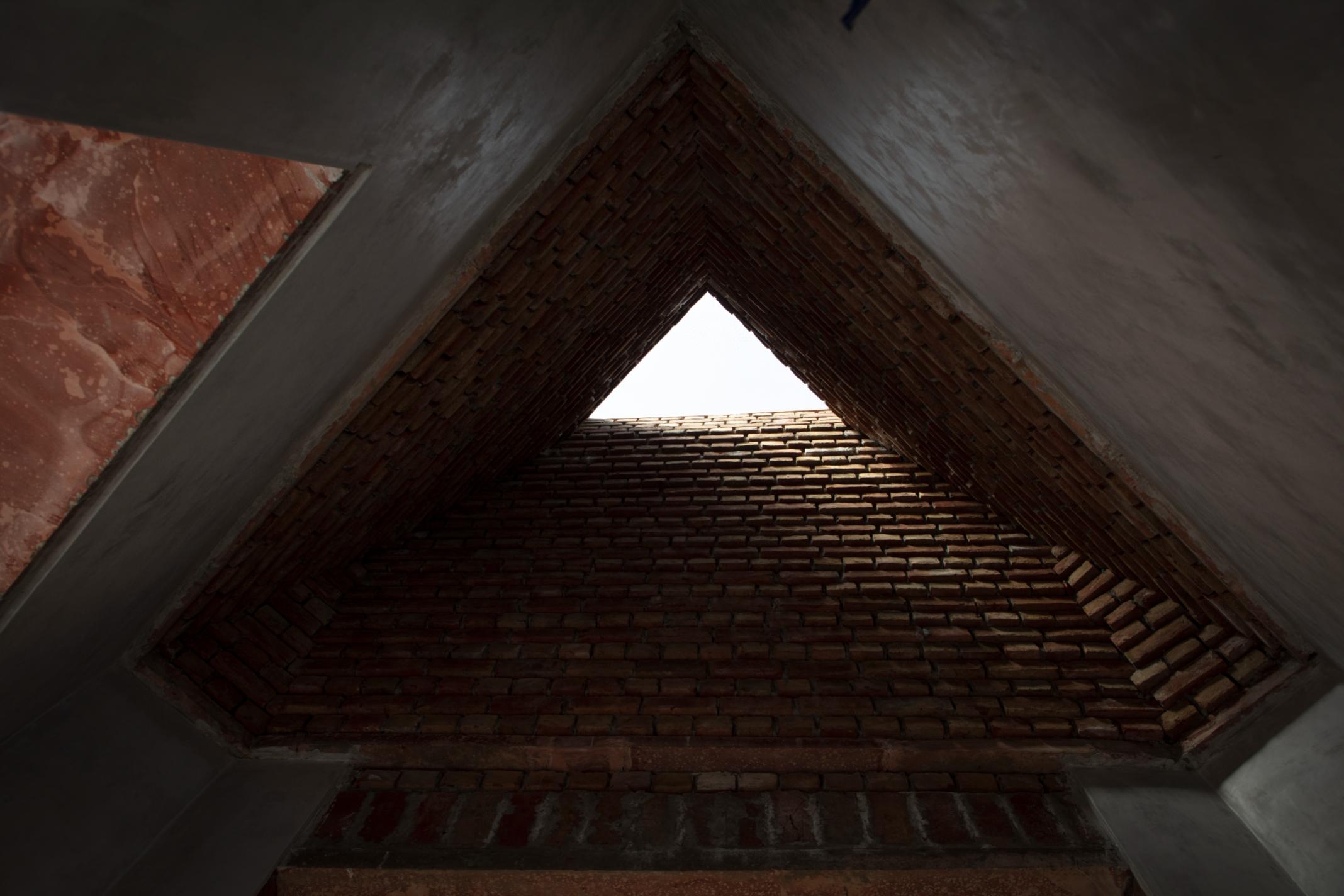
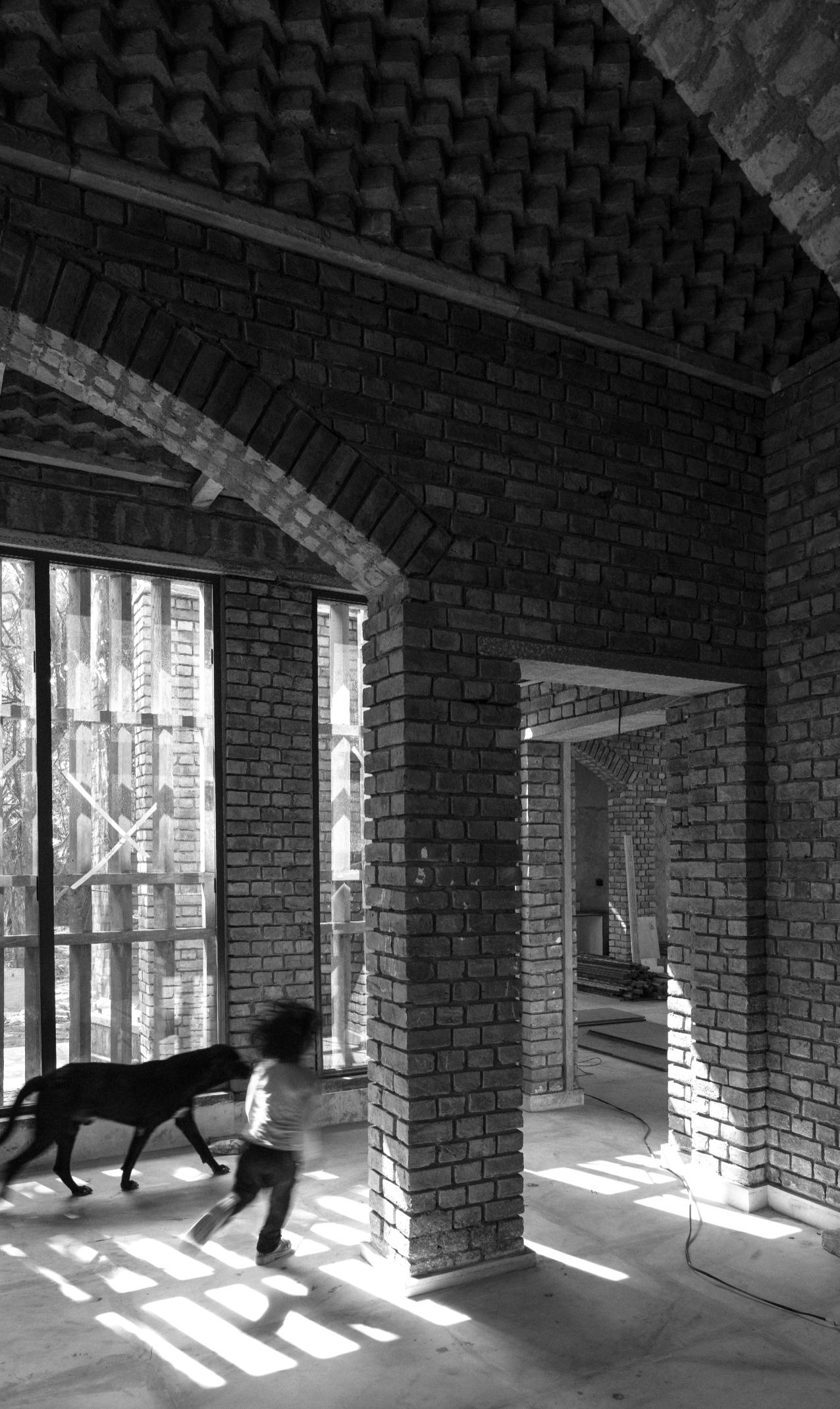
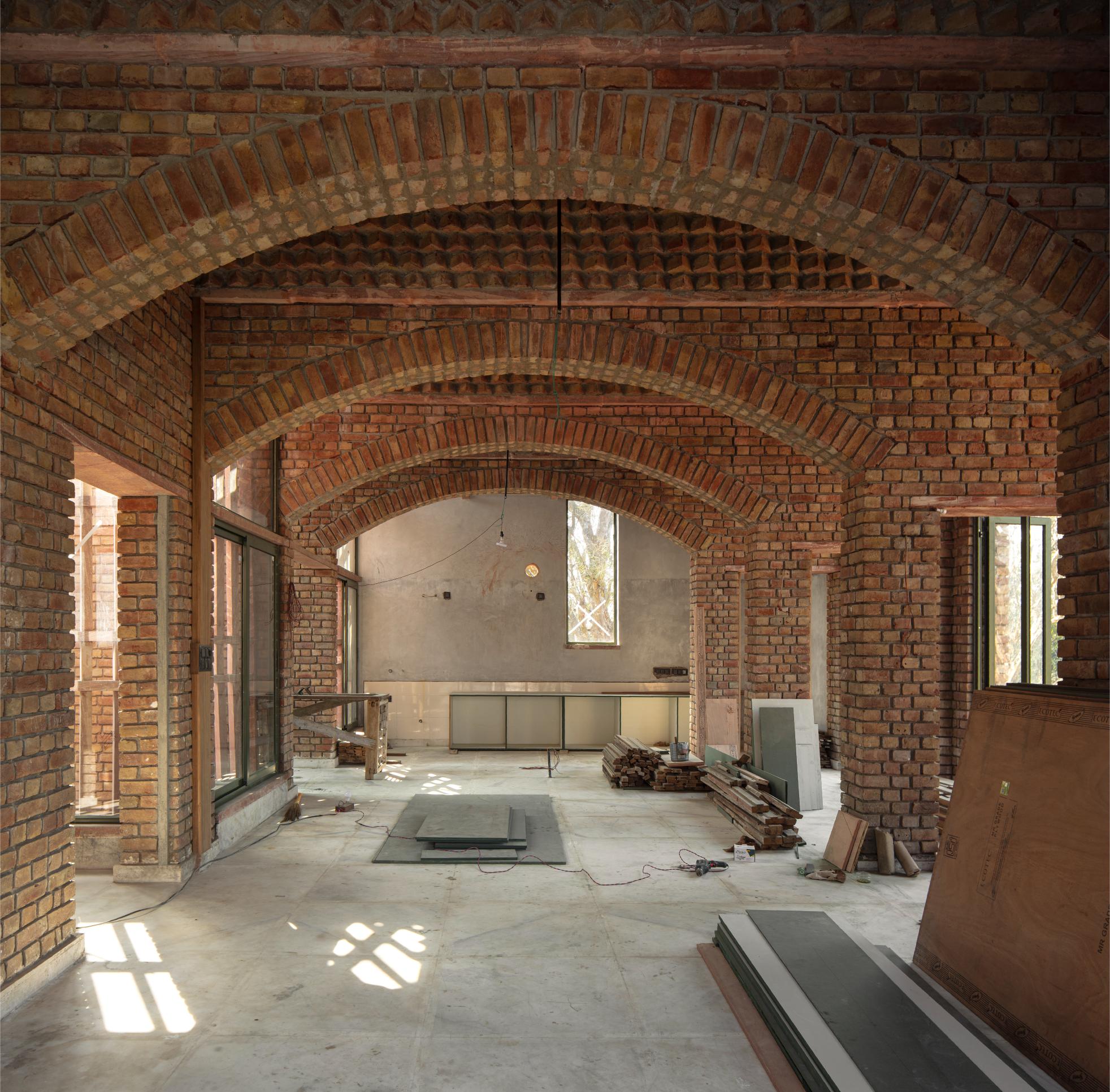
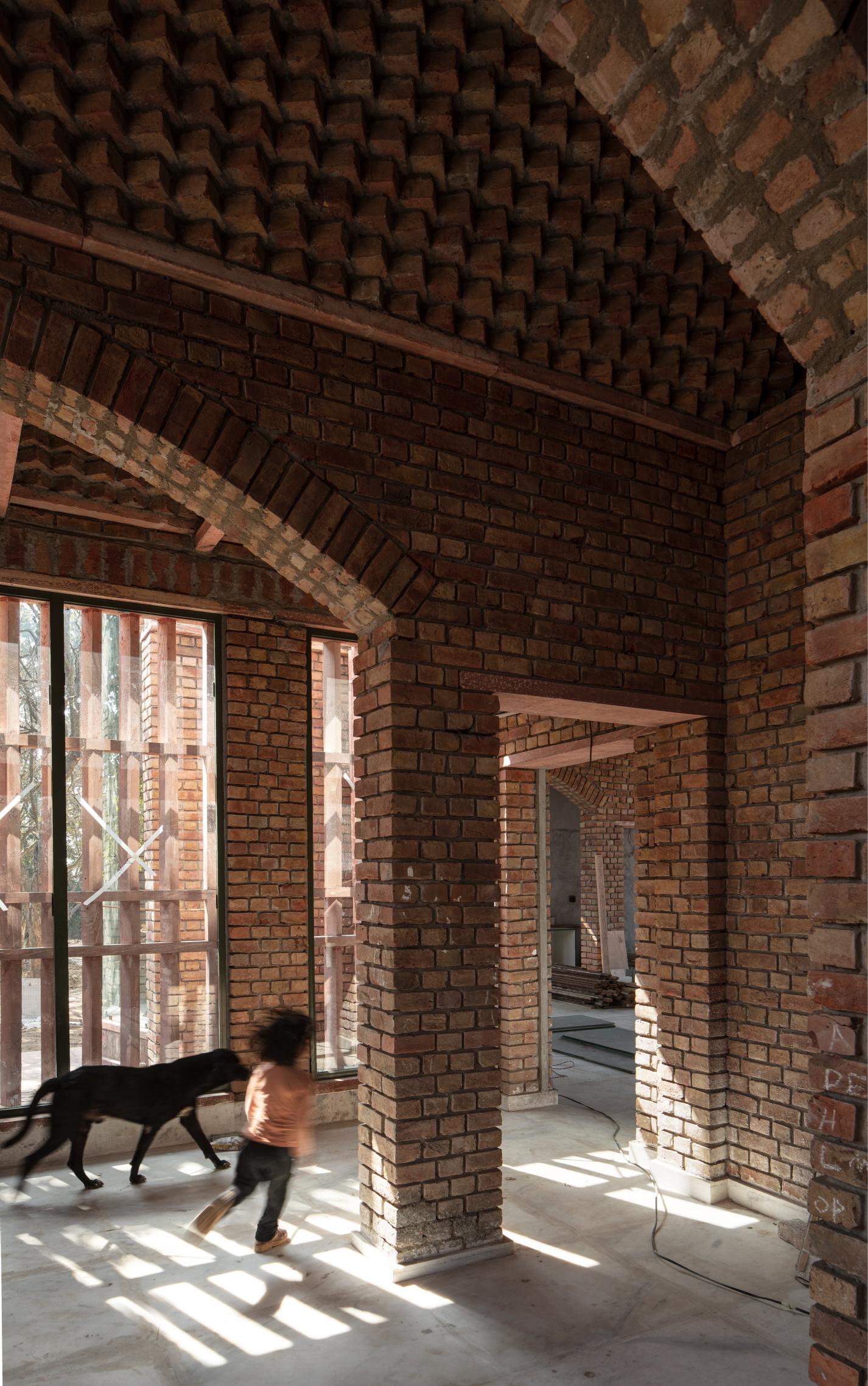
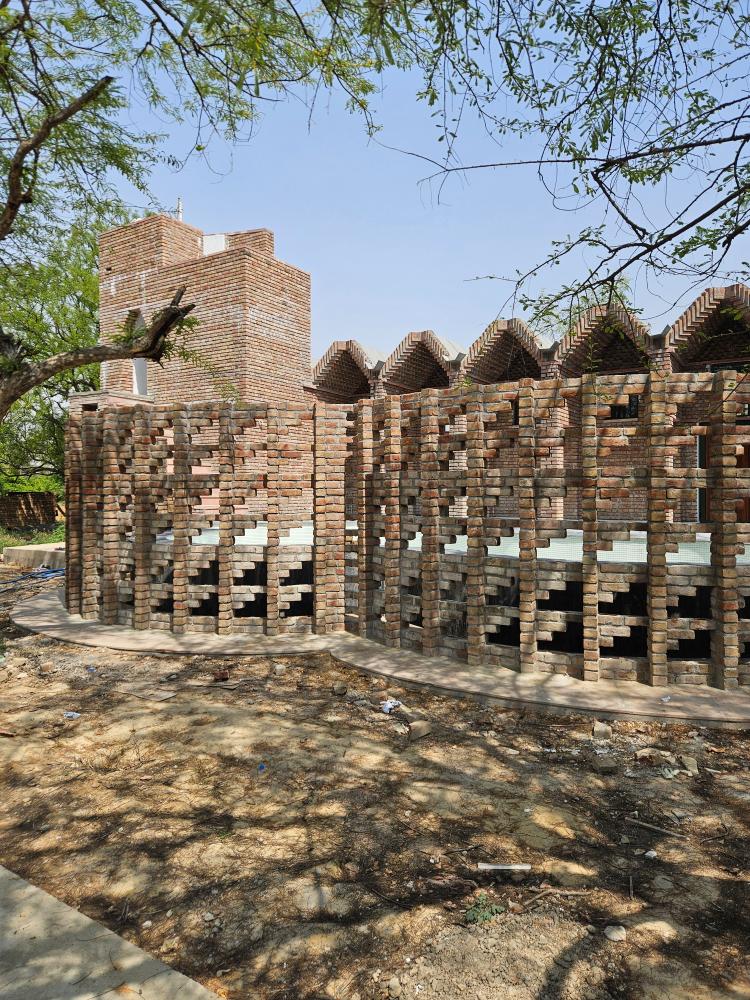
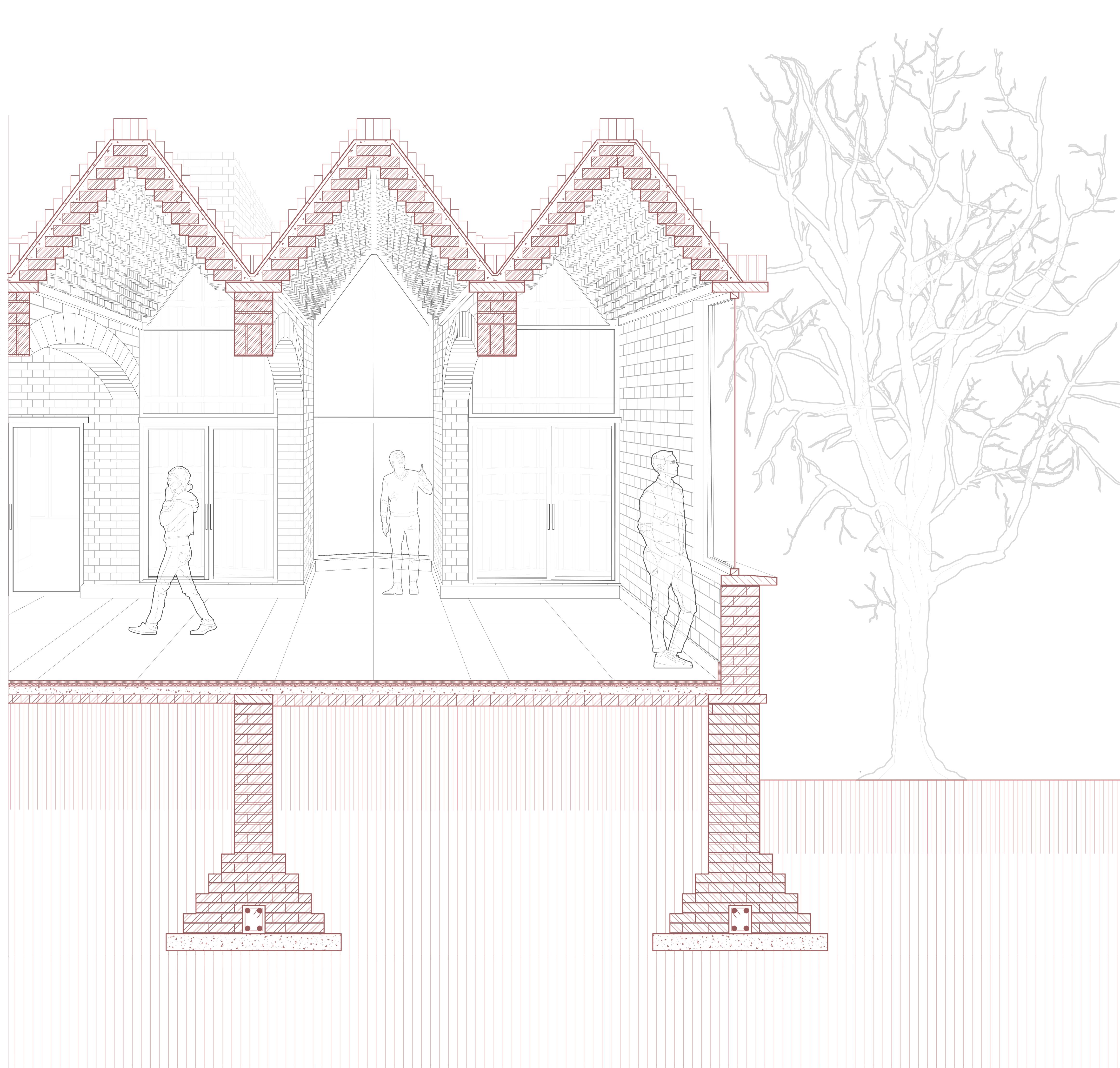
We decided to eliminate steel for the structure all together and work predominantly with brick. We can see numerous examples of buildings, several millennia old, that are still standing, be it from the Indus Valley civilization or the Roman Empire. To aid earthquake resistance, the R.C.C. tie beams were replaced with red sandstone. Brick as the only material in consideration, our choices for spanning were vaults / domes or corbelling. We decided to make corbelled roofs as It required less skill, almost no shuttering, and it predated vaults by over a millennia. Corbelling poses a limitation of spans, for which arches were introduced to make space for the required programme functions. In the design of the corbelled roof, we rotated the brick 30 degrees, which gave the ceiling its fish scale texture. The slight angle in the roof bricks also contributed to the soft pleating on the facade.
Screens made of red sandstone then followed this profile. While the mortar for the bricks uses cement for strength, the internal walls are plastered with lime, another ancient material that is long lasting, with cooling properties.
The flooring material is white marble to provide a refined contrast to the rough bricks.4 The siting of the house allowed for the building to be nestled amongst the gooseberry trees, thus, taking advantage of the shade they provide. We sized the building to fit in an existing clearing amongst the trees in order to not cut any.
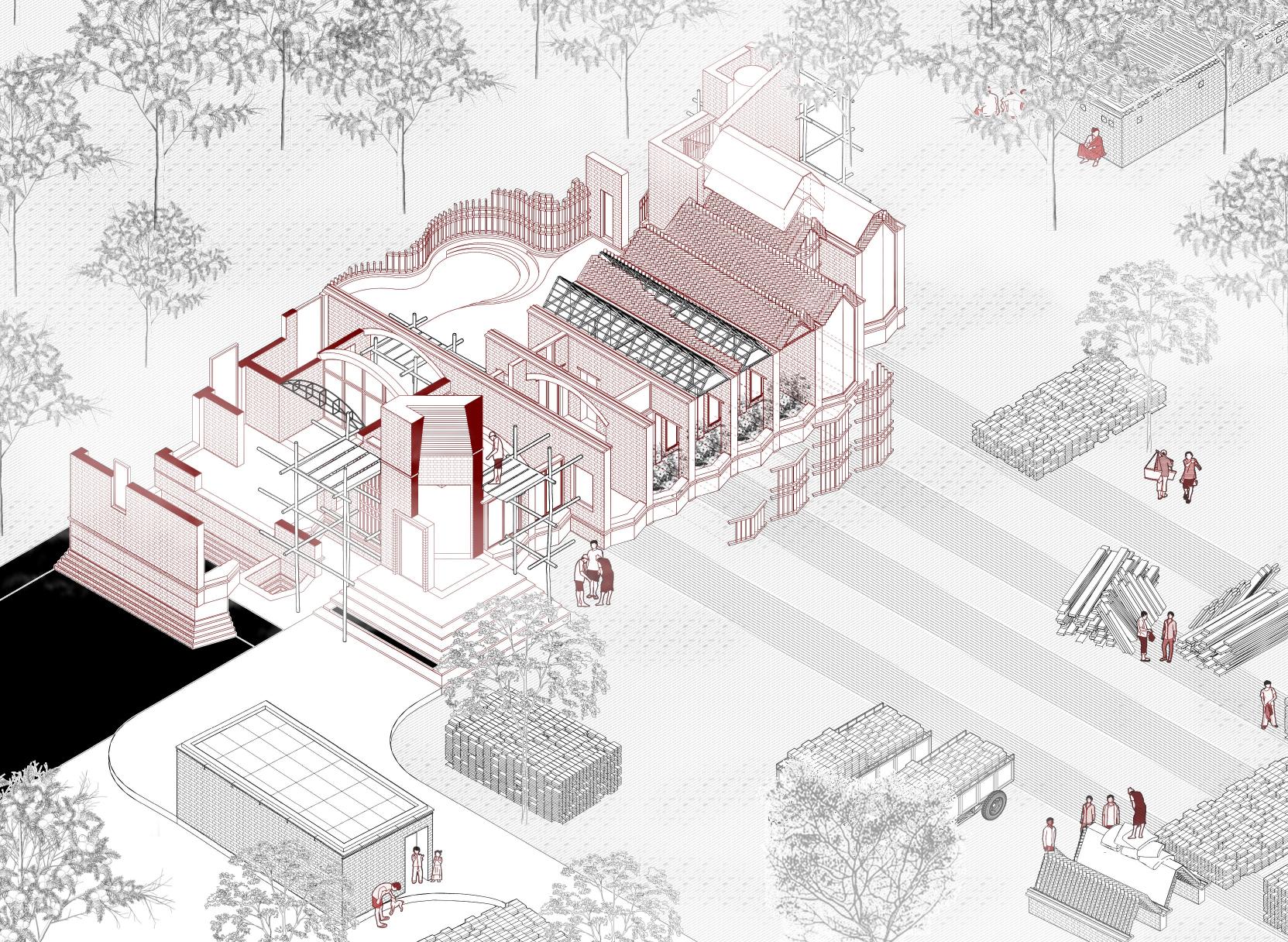
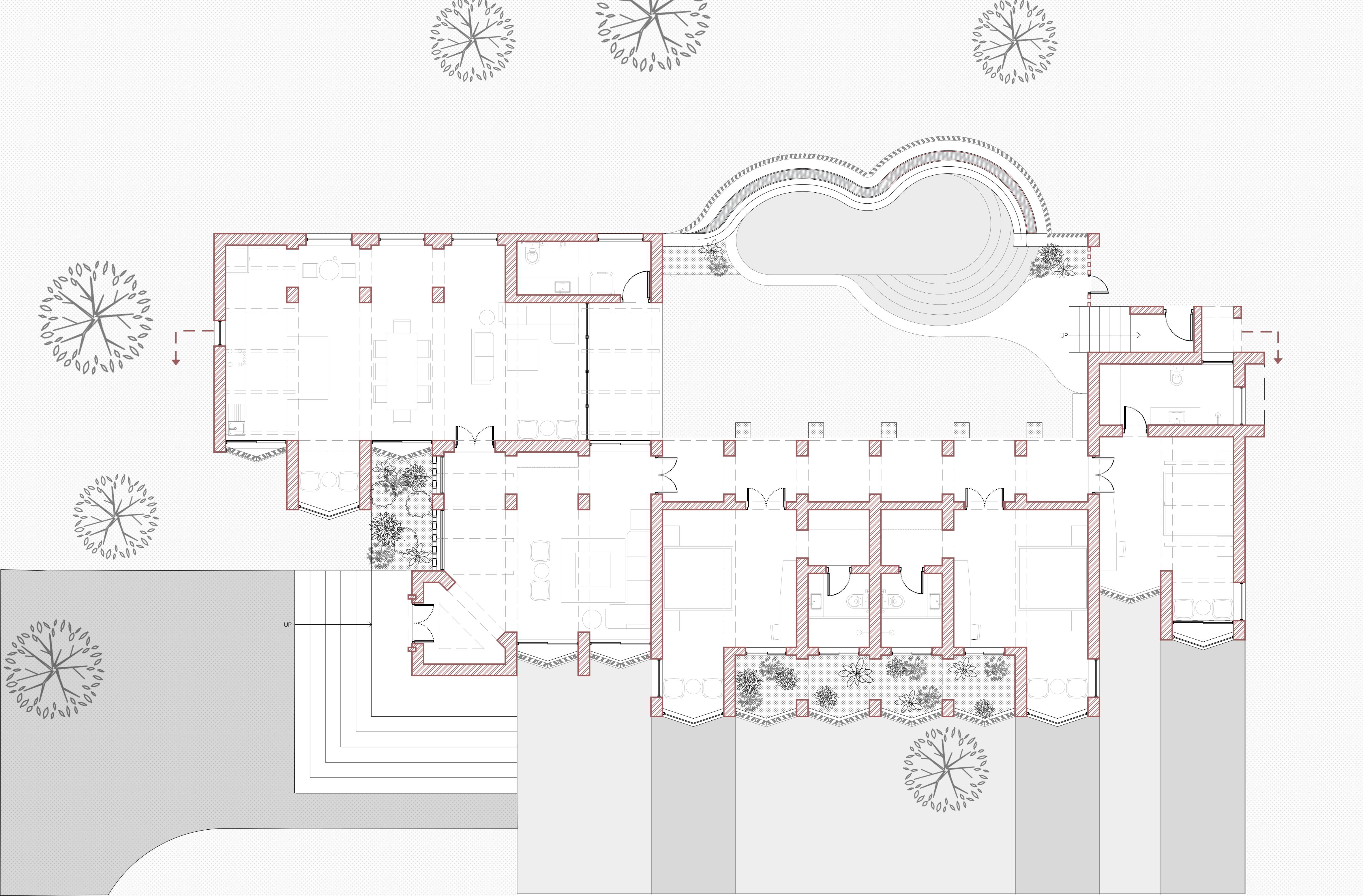
Building on a field (agricultural), the immediate response was to consider the building as a field condition, with no beginning or end, and with the possibility of expanding in all directions. Our site is dotted with gooseberry trees in an organized grid. Taking cues from the planting, we proposed a series of parallel walls that responded to this agricultural grid. Our building was sited in a pre-existing clearing amongst the trees, which formed a natural boundary to the ever-expanding the field of parallel walls.
The meter proposed for the series of parallel walls was based on the adjusted human span - 1.8m which works out to be a structurally optimal spacing for the corbelled roof system. These aids in constructing the building by hand as well as giving it a human scale.
While the structural diagram is a simple one - parallel walls, the monotony in space is broken by introducing compression and expansion spaces. The rooms arranged around a courtyard towards the east and south. As the load bearing walls are aligned along the east-west axis, Each room has a fenestration on two sides. This allows for natural ventilation as well as daylight in the morning and evenings. Verandahs towards the courtyard as well as screens towards the east makes for expanded thresholds.
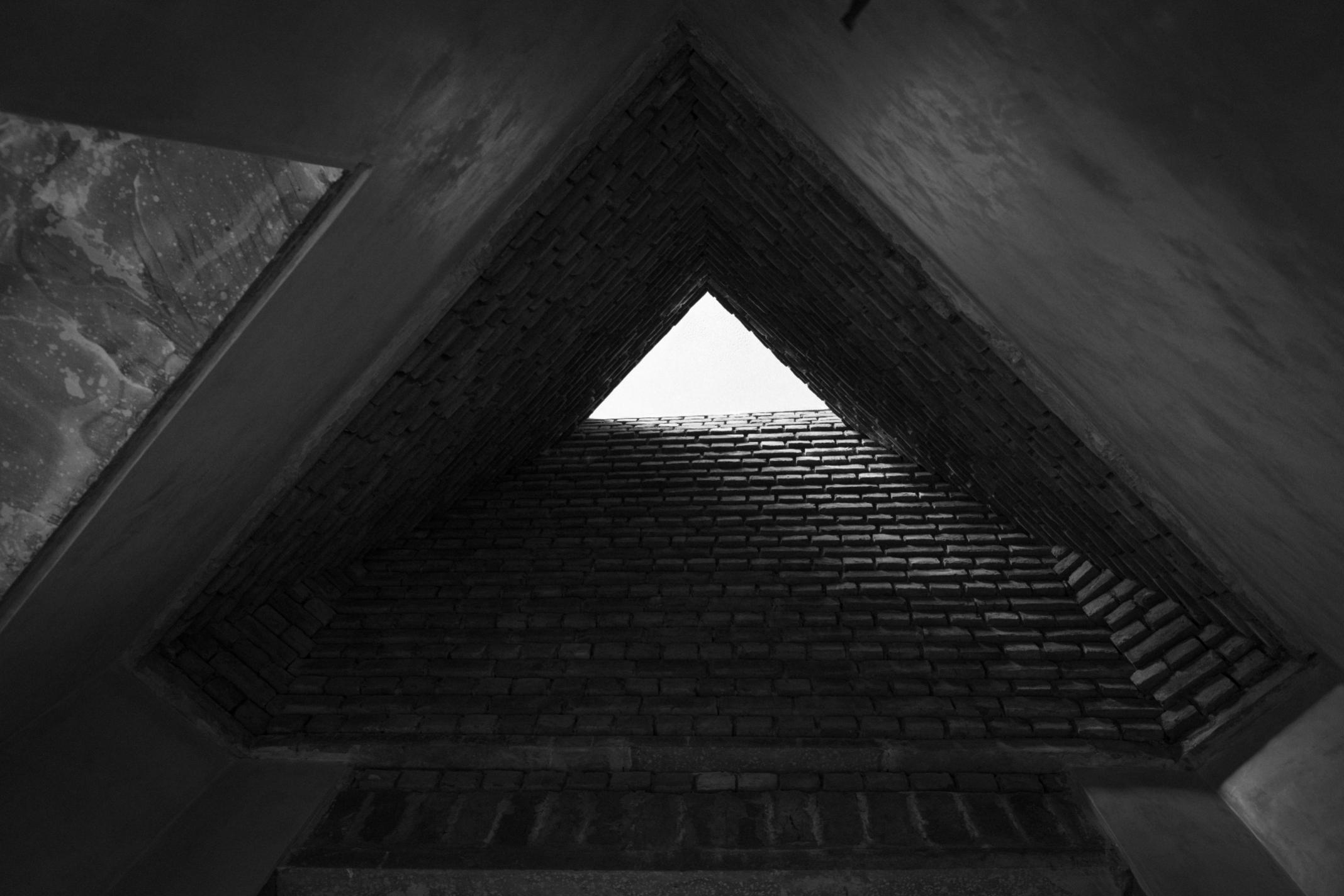
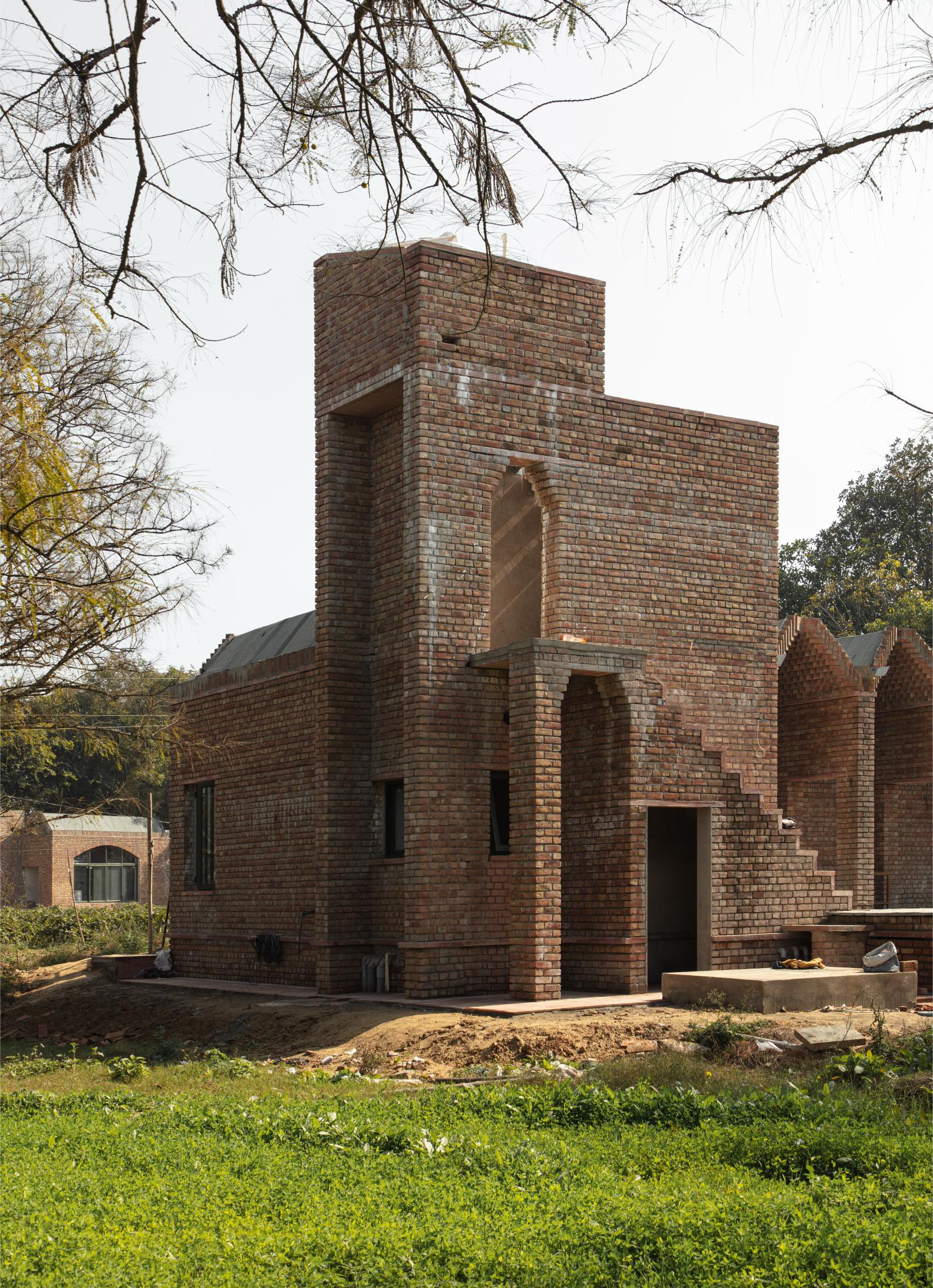
The entry is marked by a tower with a top light, a compressed space that gradually opens up into the foyer and finally into the courtyard. The quality of light is also graded, moving from a point the source of light to a screened space and finally the open court.
The rooms are formed within 2 bays, and they are modular in nature. In contrast to the rooms, The living room is a large hall that expands into the courtyard. The visual axis connecting the hall and the courtyard culminates in the stair tower, which then changes the direction of the axis from horizontal to vertical. The stair tower takes you up to the water tanks, where one comes above the canopy of the trees to get a view of the River Yamuna.