

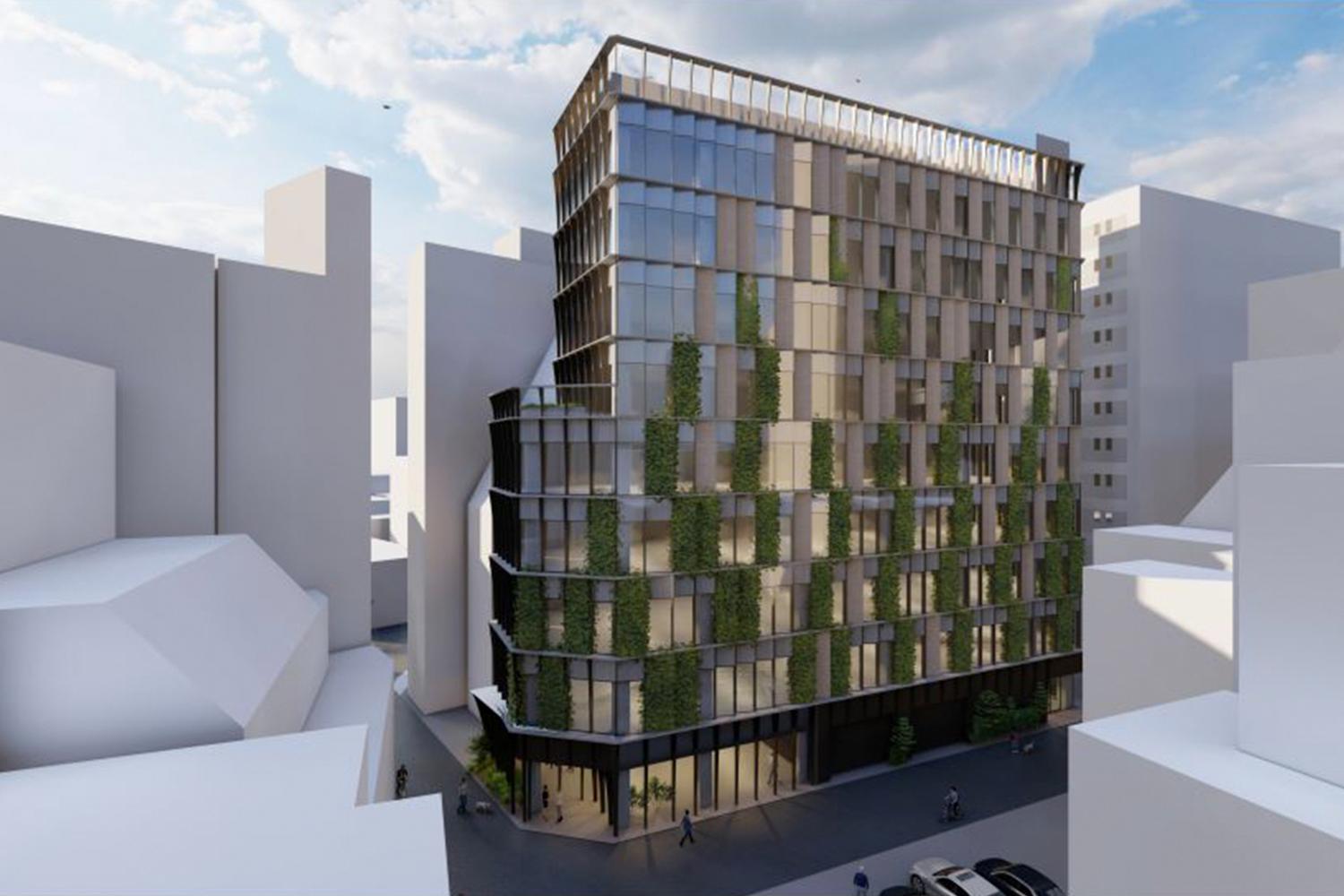
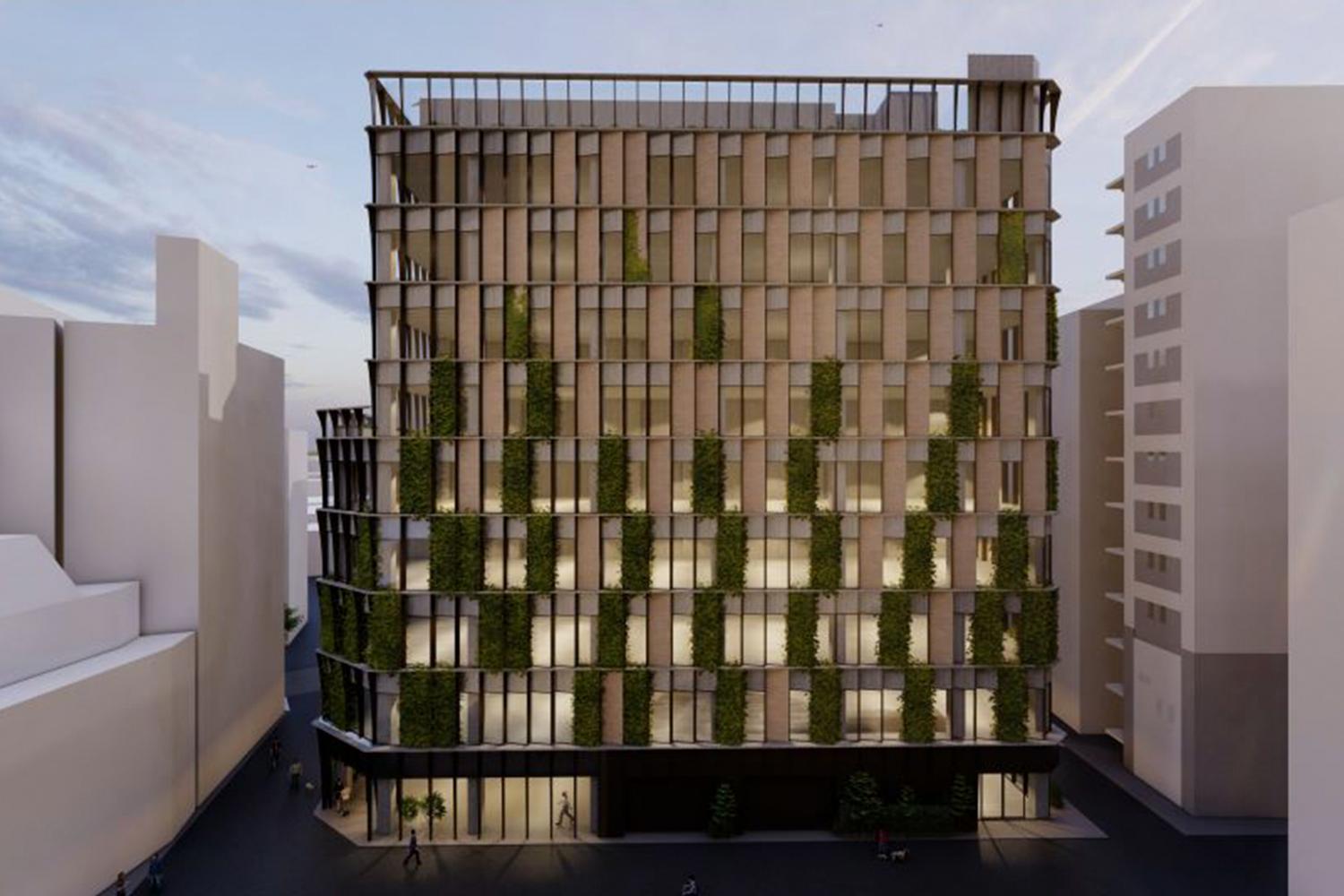
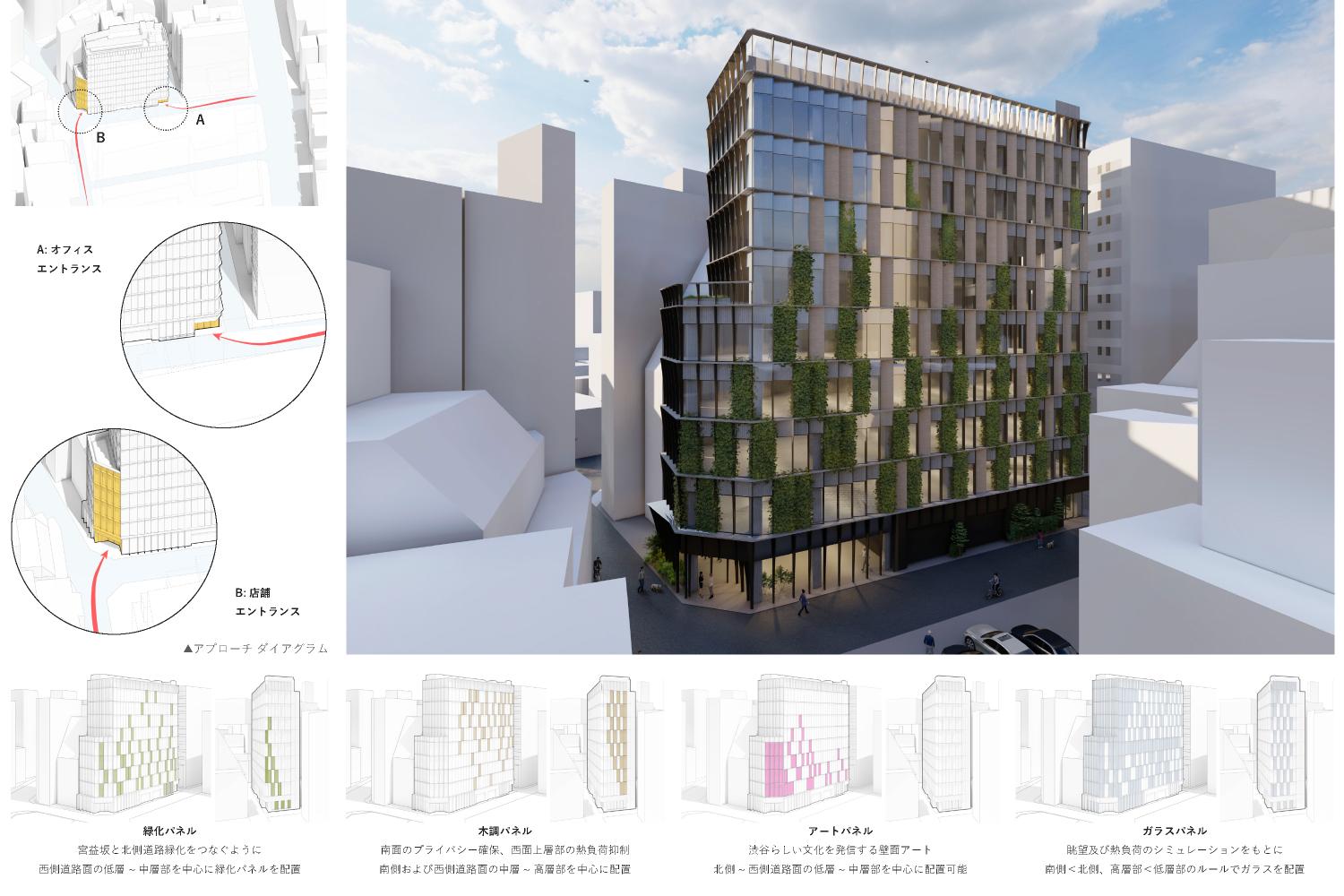
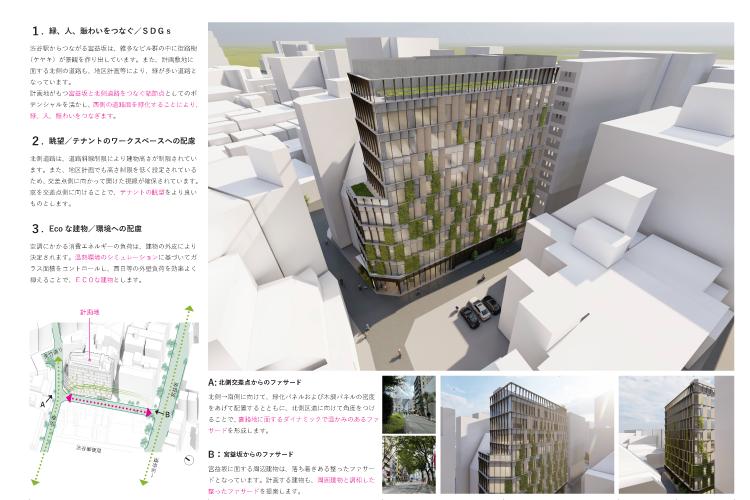
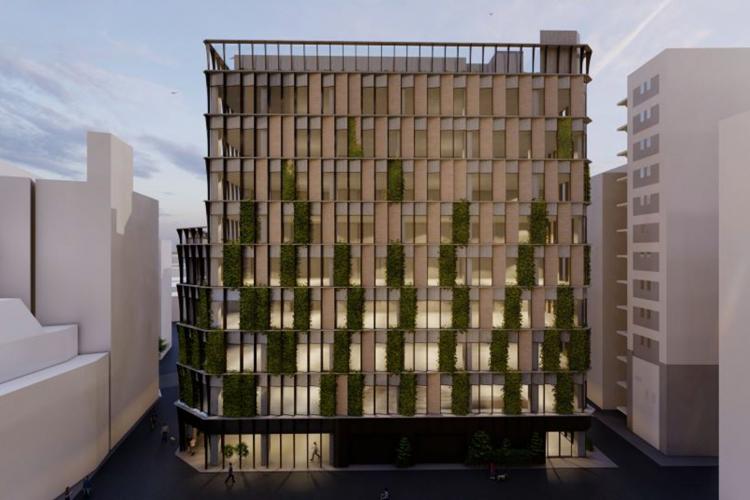
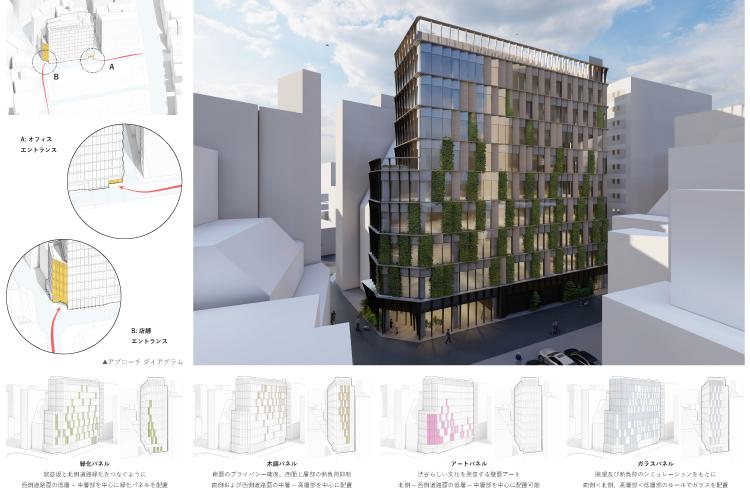
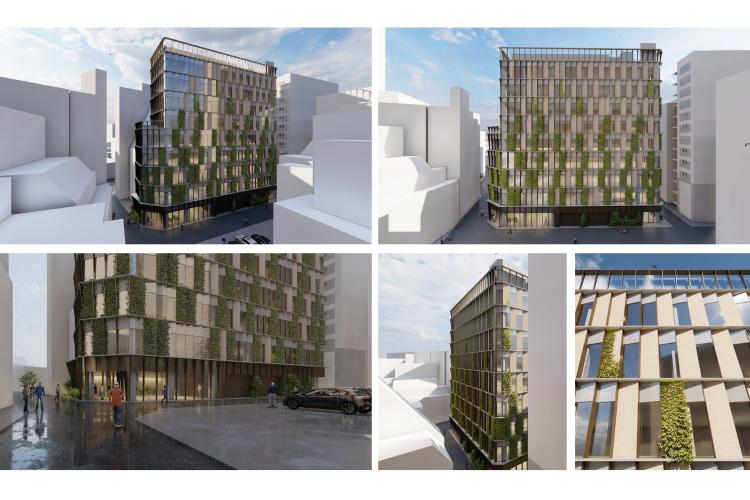
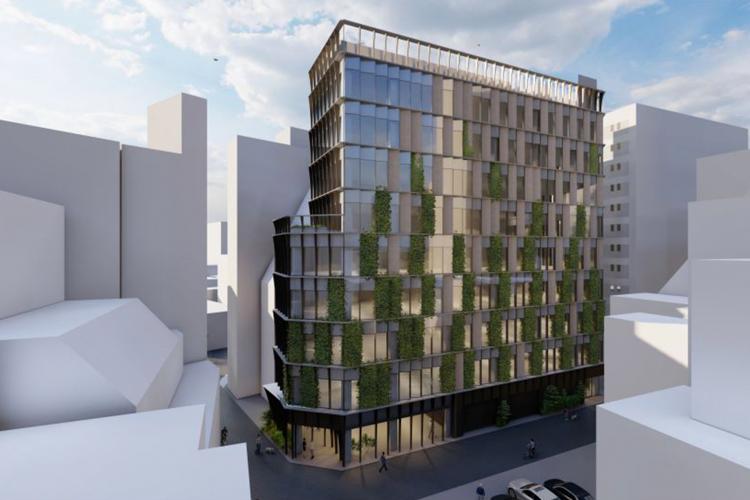
This project focuses on the site’s potential as a nodal point connecting Miyamasuzaka—characterized by its continuous row of zelkova trees extending from Shibuya Station—and the northern street known for its street-culture activities. The proposal envisions the building as an urban mediator that links two streets of distinct character. In a heterogeneous urban context where street trees form a primary visual axis, the design vertically extends this continuity by introducing active greening, particularly along the western street frontage, creating a façade that connects greenery, people, and urban vibrancy at the architectural scale.
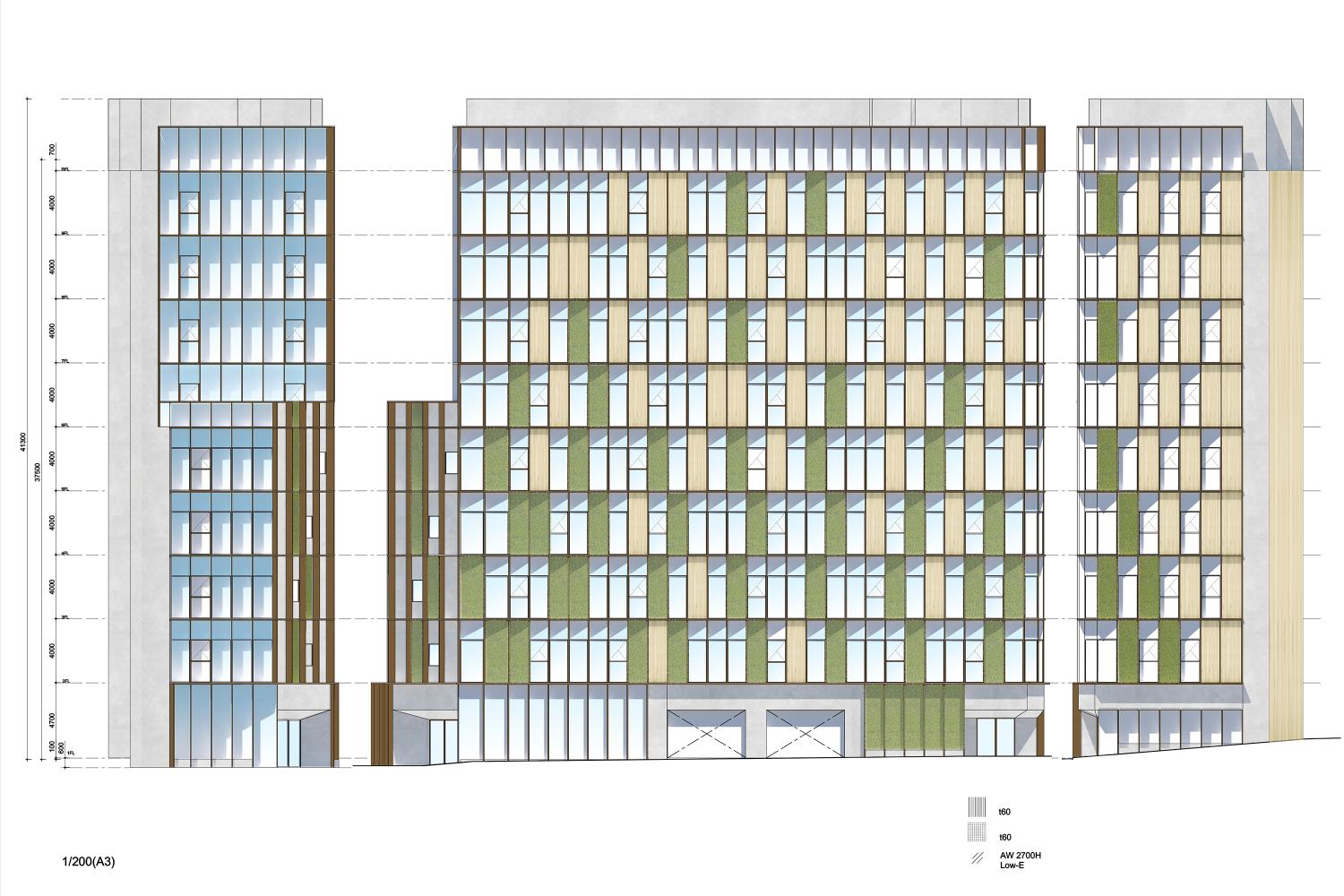
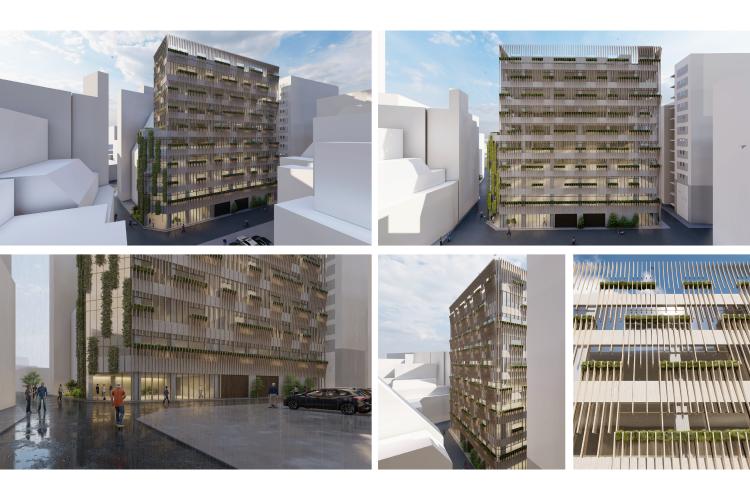
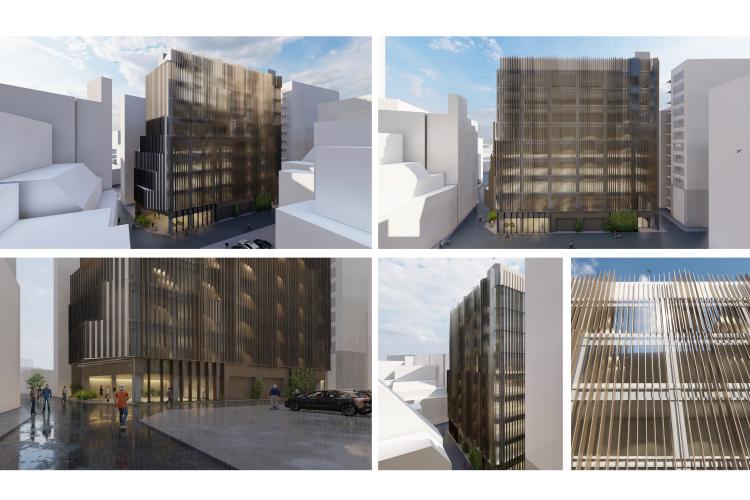
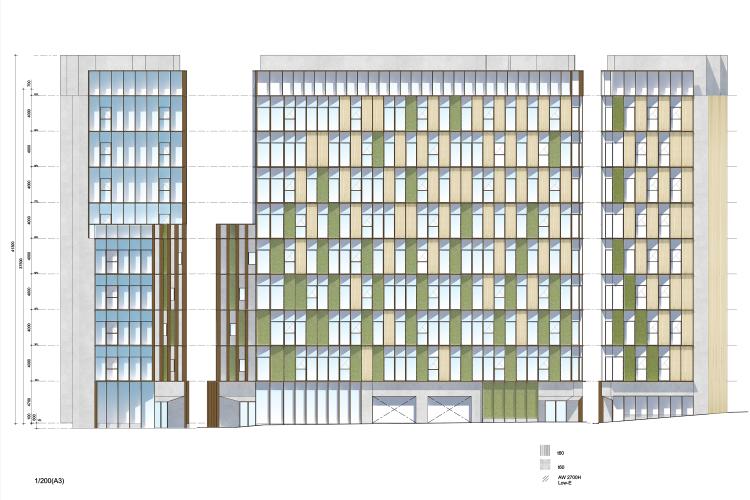
The exterior strategy adopts a gradient composition in which the density of green panels, art panels, and wood-toned panels increases progressively from north to south. In addition, the façade plane is subtly angled toward the northern side street, responding to the finer backstreet scale while generating a dynamic, warm expression with depth and movement. In contrast, the Miyamasuzaka frontage is designed with a calmer and more ordered composition that aligns with the character of the surrounding buildings, resulting in a dual-aspect façade that responds differently to each street condition.
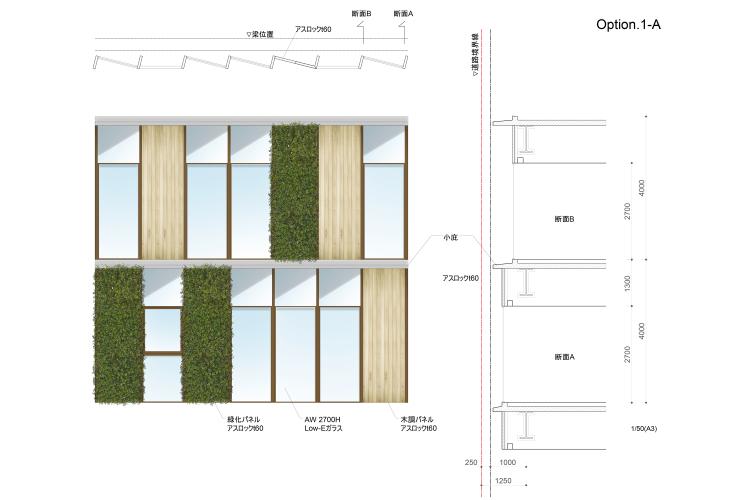
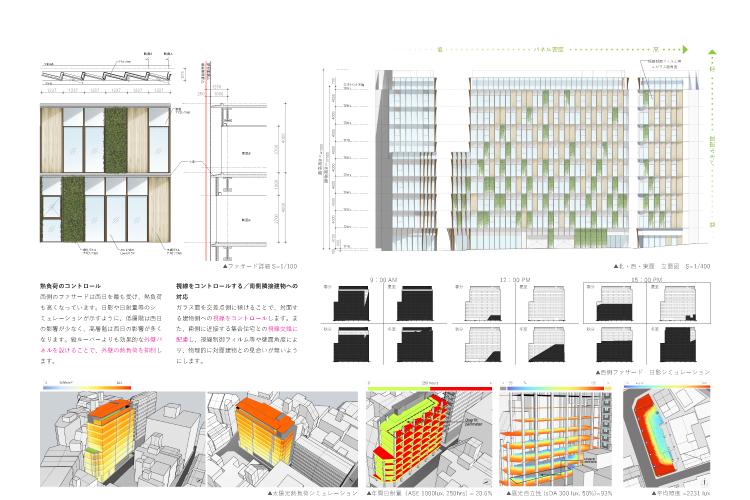
Because height controls along the northern street secure open sightlines, the orientation and placement of openings are optimized to provide tenants’ workspaces with views toward the intersection. Furthermore, based on thermal-environment simulations, the glazing ratio and envelope composition are carefully calibrated. High-performance exterior panels are applied to the upper levels, where western solar gain is greatest, reducing heat load while improving environmental performance and workplace comfort. The project integrates urban connectivity, streetscape continuity, and environmental responsiveness into a single architectural proposal.
本計画は、渋谷駅から連続するケヤキ並木が印象的な宮益坂と、ストリートカルチャーを発信する北側道路を結ぶ結節点としての立地ポテンシャルに着目し、異なる性格をもつ二つの街路環境をつなぐ都市的な媒介装置となる建築を目指した。周辺は雑多な建物群の中に街路樹が景観の軸を形成しており、計画ではその連続性を立体的に拡張するため、西側道路面を中心に積極的な緑化を行い、緑・人・賑わいを建築スケールで接続するファサードを構成している。
外装計画では、北側から南側に向かって緑化パネル、アートパネル、木調パネルの密度を段階的に高めるグラデーション構成を採用するとともに、北側区道に対して外装面に角度変化を与えることで、裏路地的なスケール感を受け止めながら、動きと奥行きを感じさせるダイナミックで温かみのある表情をつくり出した。一方で宮益坂側については、周辺建物の整った街並みに呼応する落ち着いた構成とし、街路ごとのキャラクターに応答する二面的なファサードデザインとしている。
また、北側道路は高さ制限により視線の抜けが確保されていることから、開口部の向きと配置を最適化し、テナントワークスペースから交差点方向への眺望が得られる計画とした。さらに、温熱環境シミュレーションに基づいてガラス面積と外皮構成を調整し、西日による熱負荷の大きい上層部には遮熱性能の高い外装パネルを採用することで、環境性能と執務快適性を両立させている。都市的な接続性、景観的連続性、環境配慮を統合した建築提案である。